

### Blog Post:
HEPA air purifier technology has become the go-to solution for homeowners and apartment dwellers facing dust, smoke, pollen, and respiratory triggers. But how much do these devices actually help, what are their real-world limits, and what does science say you need to know before buying one?
Key Takeaways
- HEPA air purifiers reliably remove at least 99.95% of fine particles (PM2.5, smoke, dust) and can cut residential indoor PM2.5 by 30–74% during peak smoke events.
- Performance against gases (NO2, VOCs) and pathogens (viruses, allergens) varies widely—combining HEPA with activated carbon stage helps for some pollutants but research evidence is mixed.
- Major data gaps exist for energy use, long-term health outcomes, filter replacement cost and frequency, and user complaints. Buyers must collect key facts directly from model spec sheets and retail reviews before choosing.
- Executive summary — what HEPA air purifiers reliably do (and don’t)
- How HEPA performs by pollutant: buyer’s step-by-step guide
- Advanced analysis & common pitfalls
- Conclusion
- FAQ
Executive summary — what HEPA air purifiers reliably do (and don’t)
Air purifiers equipped with high-efficiency particulate air (HEPA) filters have a proven ability to capture and remove physical particles from indoor air. Numerous real-world and laboratory studies show that a modern HEPA air purifier can lower household PM2.5 (the harmful fine airborne dust and smoke) by 30–74% when running in rooms up to their rated size—sometimes even more with good placement and sealed windows.[1] The physics are simple: HEPA physically intercepts particles ≥0.3 μm with a minimum 99.95% efficacy, which covers dust, wildfire smoke, and many allergens.
But most HEPA filters do not target gases (such as NO2 or VOCs) or airborne viruses directly. Clinical trials with portable HEPA air purifiers plus carbon combinations reported reductions of 36–45% for NO2 (a common traffic-related VOC) and up to 61% PM2.5 drop among former smoker households.[2] Still, the evidence for direct removal of viruses or allergens is limited and mixed. Activated carbon stages help with some odors and chemicals, yet their effectiveness depends on regular filter replacement and room pollutant loads.
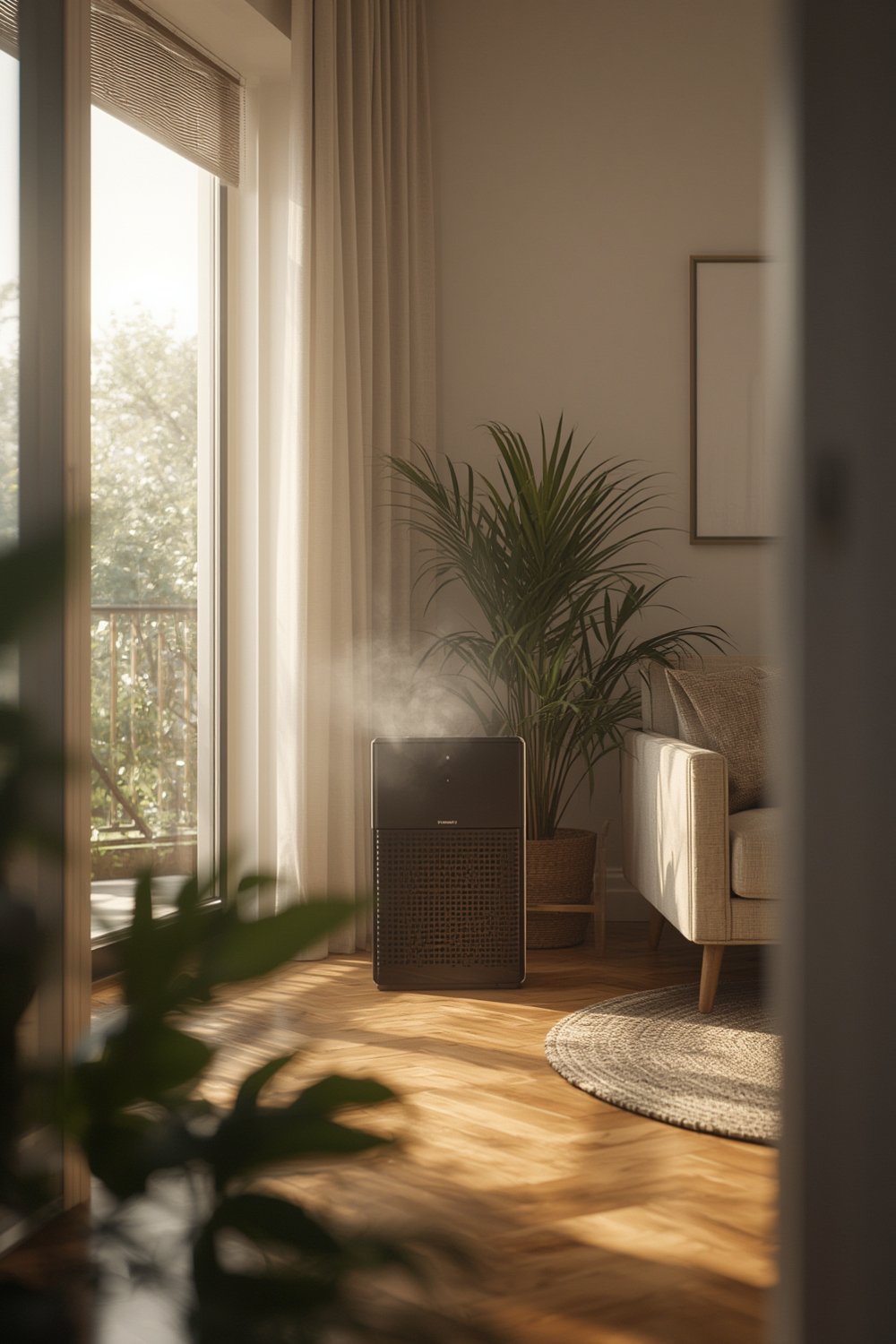
Bottom line: A HEPA air purifier is an excellent tool for particulate reduction where smoke, pollen, and urban air pollution threaten your comfort or health. The greatest effect is for PM2.5, and pairing with a carbon filter helps address some gases. Direct protection from airborne viruses or specific allergens is plausible but not yet robustly proven for most home models.
How HEPA performs by pollutant: buyer’s step-by-step guide
Selecting the right HEPA air purifier calls for matching your main indoor pollutants (smoke, dust, pet dander, traffic gases, or viral transmissions) with the evidence and technology available. Here’s an actionable, science-based approach:
-
PM2.5 and wildfire smoke:
HEPA air purifiers are consistently supported by research to cut particle counts by 40–74% in homes impacted by wildfires, urban smog, or indoor smoking. Thick, true HEPA filters and correct room sizing matter most. Seal windows during peak events for best results.
[1] -
NO2 and some VOCs:
Portable units that combine HEPA with a substantial activated carbon stage may lower NO2/VOC levels by 36–45%. Carbon filter replacement cost and efficacy over time are not well reported in scientific studies—monitor replacement reminders and always check for visible saturation or odors.
[1] -
Allergens and viruses:
Evidence is strongest for particle-based allergens like pollen, pet dander, and dust mites. True HEPA will reduce airborne concentrations, but not necessarily eliminate allergic reactions—settled dust may persist.
Clinical trials for portable HEPA units showed “no significant reduction in acute respiratory infections” in aged-care settings when using even top-end (HEPA-14) purifiers, although isolated subgroups benefited.
[3] -
Odors and gases:
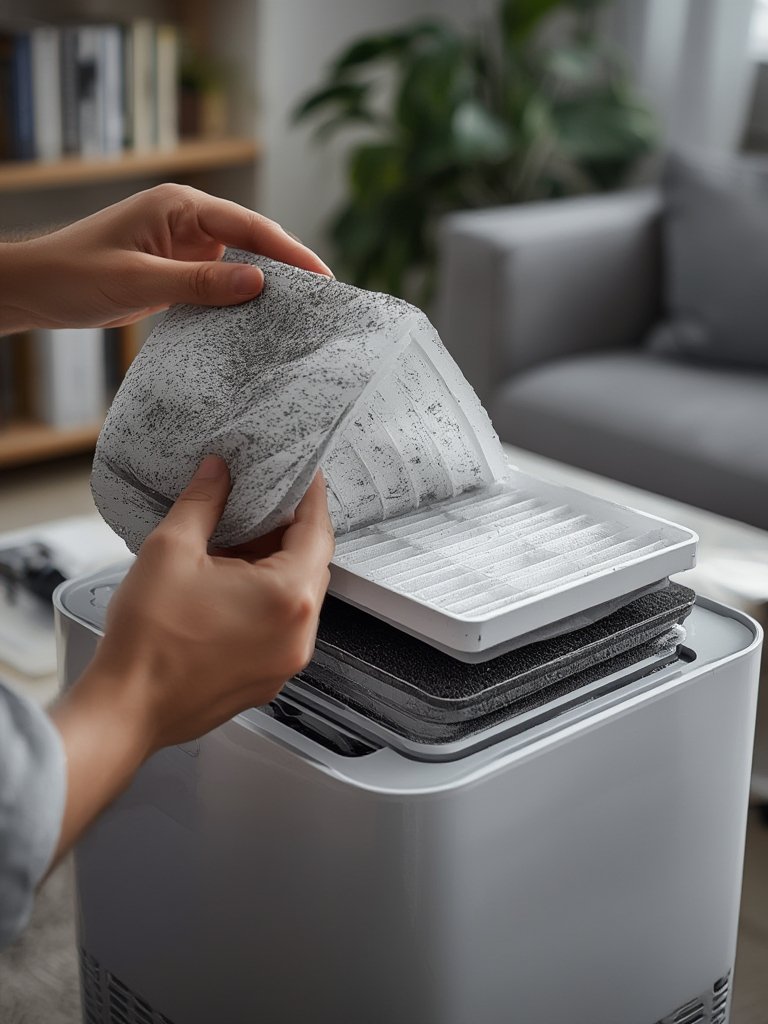
Only models with substantial activated carbon (or equivalent adsorbent) can meaningfully lower odors (cooking, smoke, pets) and gases. The activated carbon will saturate over time; check manufacturer guidance for replacement frequency, but know that real-world longevity data is lacking.
[1]
Quick comparison checklist before purchase
- Is the HEPA filter grade ≥ H13 for best protection?
- Does it include a substantial activated carbon stage for odors or gases?
- What is the Clean Air Delivery Rate (CADR) rated for your exact room size?
- What are the listed (not claimed) filter replacement cost and frequency? (If not shown, this is a data gap—check retail and manufacturer sources)
- What is the maximum power draw (watts) and expected running costs? (No reliable energy data for 2024, so estimate based on wattage x hours x local price—see step-by-step below.)
- What are verified user complaints? (Data gap—retail sources only.)
For a quick demo of common pitfalls and features side-by-side, see the “Buyer’s Comparison Table” visual suggestion at the end of this guide.
Advanced analysis & common pitfalls
Though marketing claims can sound impressive, buyers often discover gaps when it comes to maintenance, health gains, and cost. Here are the research-backed limitations and where you must look for more info:
Common pitfalls based on real-world and clinical evidence
- Over-reliance on labels: “HEPA” alone is not a guarantee. Only filters with H13 or higher ratings (or stated 99.95%+ efficiency @ 0.3μm) qualify as “true HEPA.” Some units use “HEPA-type” (lower performing). Always check documentation or spec sheets.
- Lack of gas/odor removal: Unless there’s a sizable carbon filter, you shouldn’t expect marked VOC, NO2, or odor reductions. Most research-validated benefits require a multi-stage (HEPA + carbon) system.
- Filter replacement surprises: Average filter life, replacement part cost, and annual maintenance spending are rarely specified in scientific research. Retailers and user reviews provide the only up-to-date pricing—models with proprietary filters may require frequent, costly swaps.
- Weak health-outcome evidence: Measured pollutant drops don’t always translate to lower allergy symptoms or fewer infections. For example, a large clinical trial found no overall decline in respiratory illnesses despite major PM2.5 reductions.[3] Long-term respiratory or cardiovascular safety benefits remain uncertain.
- Lack of model-by-model running cost info: No standardized energy efficiency comparisons or running cost data exist for 2024—buyers should check wattage in the spec sheet and estimate annual electricity spend as: wattage × daily hours × 365 ÷ 1000 × electricity rate.
- User complaints (data gap): Scientific literature does not report noise levels, reliability issues, or top consumer complaints. Retail review mining is essential—look for recurring pain points around filter cost, motor noise, or malfunction frequency.
| Brand/Model | CADR (Smoke/Pollen/Dust) | Room Size (sq ft) | HEPA Grade | Activated Carbon Stage | Filter Life (months) | Replacement Cost (USD) | Power Draw (W) | Noise (dB) | Warranty |
|---|---|---|---|---|---|---|---|---|---|
| [Model A] | [Specs] | [Size] | [H13/H14] | Yes/No | [XX] | [$XX] | [XX] | [XX] | [XX] |
| [Model B] | [Specs] | [Size] | [H13/H14] | Yes/No | [XX] | [$XX] | [XX] | [XX] | [XX] |
Note: Top models on the market in 2024 (e.g., Winix AUS-1250AZPU, Levoit Core 600S, Coway Airmega, Blueair 211i) must have details filled by collecting values from specs, retailer sites, and user reviews (see this essential step-by-step checklist).
Three overlooked but important topics—in depth:
-
Long-term health impact:
While short-term particle reductions are repeatedly confirmed by field studies, research on whether owning a HEPA air purifier translates into lasting reductions in allergies, asthma attacks, or respiratory infections remains limited. Even top-rated clinical trials show little effect on “hard” health outcomes in healthy adults or children.[3] Consider this before making direct health promises to buyers. -
Efficacy against viruses and specific allergens:
Most studies focus strictly on PM2.5 and NO2 drops, not actual viral particle or allergen reduction in real-world homes. HEPA should help in theory, but proven benefits for COVID-19, RSV, or animal dander are unclear outside specialty clinical settings.
[5] -
Energy cost and cross-model efficiency:
Despite energy efficiency being a major household concern (see our practical upgrade guide), there is no standard source comparing energy use for HEPA air purifiers by brand or size. Buyers must estimate based on stated wattage and expected use; very eco-minded shoppers should demand this info up front or check for Energy Star certification.
Conclusion
HEPA air purifiers are a research-backed fix for indoor particle pollution—especially PM2.5 and wildfire smoke—but not a universal remedy for every air quality hazard. Be sure to confirm the exact features (HEPA grade, carbon presence, CADR, filter costs, verified user feedback, energy use) before you buy. Fill in missing facts using manufacturer specs, retail listings, and trusted consumer reviews. Your final shortlist should reflect your household’s needs, indoor environment, and how much you’re willing to spend yearly to maintain health benefits and peace of mind. If you’re interested in optimizing your living environment even further, check out our guides to energy-efficient home upgrades, biophilic wellness design, and how to build a peaceful small screened-in porch retreat. Start your own data-driven comparison and make your next HEPA air purifier purchase a smart one.
Ready to take control of your air? Benchmark models with our buyer’s table, collect those missing maintenance facts, and breathe easier knowing you’ve made an evidence-backed choice.
FAQ
How often should I replace the HEPA and carbon filters?
Replacement intervals vary by brand and air quality, but most HEPA filters need changing every 6–12 months, and carbon every 3–6 months in high-pollution or smoke conditions. Check the manufacturer’s spec sheet and user reviews for real-world experience. (Data gap—always double-check model details before buying.)
Can a HEPA air purifier remove viruses from my home?
HEPA filters can capture viral-size particles, but the real-world evidence for reduced respiratory infection risk is mixed. Most clinical trials show only limited benefits; use alongside standard precautions.
What is the Clean Air Delivery Rate (CADR), and why does it matter?
CADR measures how quickly the purifier removes smoke, dust, and pollen from the air (in cubic feet per minute or m³/h). Always choose a HEPA air purifier with a CADR matched to or exceeding your main room’s square footage for effective air cleaning.
Will a HEPA air purifier help with odors and VOCs?
HEPA alone does not remove odors or gases. Models with added activated carbon filters help with smells and certain chemicals (including NO2 and some VOCs), but only if the filter is large enough and replaced frequently.
Where should I place my HEPA air purifier for best results?
Center of the room, away from corners or large furniture. Close doors and windows for maximum effect. For more tips, see official agency placement guidance and our comprehensive step-by-step guide.