

Quiet air purifier performance matters most when you’re a light sleeper or parent who needs clean air through the night without disruptive noise. Most reviews just show low decibel numbers—but that’s not enough. This guide focuses on real-world quiet, spotlighting both measurable noise (dB) and the Clean Air Delivery Rate (CADR) you get at true sleep settings. If you live in the city or in wildfire zones and want restful sleep plus strong air cleaning, keep reading for tested answers you won’t find in standard buying lists.
Key Takeaways
- Most “quiet air purifier” models claim 20–24 dB on low, but you must check CADR at real night-use settings—not just rely on marketing specs.
- Tonal pitch, noise spikes, and cleaning effectiveness all impact sleep; focus on models that deliver medium-to-high CADR at ≤40 dB for true overnight comfort.
- Poorly chosen “silent” modes can leave rooms dirty for hours—always balance noise level with measurable air changes per hour (ACH).
- Quick takeaway — what “quiet” means in 2024
- How to pick a truly quiet air purifier: your actionable steps
- Advanced analysis & common pitfalls
- Conclusion & final buying checklist
- FAQ
Quick takeaway — what “quiet” means in 2024
In 2024, a quiet air purifier is no longer defined by simple decibel ratings. Quiet sleeping comfort comes from both low noise and high air-cleaning power at night. Quiet models often test at 20–24 dB (on low) and ≤40–45 dB at still-useful speeds. For context:
- 20–25 dB: Rustling leaves, your own breathing.
- 30–40 dB: A quiet library, nighttime bedroom.
- 45–55 dB: Soft fridge hum or gentle conversation.
Yet, what matters more is how much air a purifier can clean at these quiet levels. Look for products where independent testers verify medium-to-high CADR (Clean Air Delivery Rate) below 40 dB, especially for bedrooms or wildfire season.
How to pick a truly quiet air purifier: your actionable steps
-
Verify decibel ratings at real settings
Don’t just accept a 20–24 dB “low” setting at face value. Ask for measured noise at a speed that delivers at least 4–5 air changes per hour (ACH) for your actual room size. -
Compare CADR per dB, not just max specs
The most useful quiet air purifier specs combine both CADR and dB—ideally at the exact speed you’ll use at night. For example: a model that achieves PM1 CADR 128 cfm at <40 dB is far more effective for sleep than a 20 dB unit with low airflow. -
Request independent test data
Ignore only brand claims. Look for real-world data from reviewers who measure both room air cleaning time and sound (HouseFresh, ConsumerAnalysis, YouTube testers). -
Check for tonal quality and sound-design features
Beware of high-pitched whirring, rattling, or whine. Some purifiers tune for “pink noise” which is proven less disruptive for sleep. -
Understand cleaning trade-offs: never run purely on silent mode during wildfires or high pollution
Independent lab testing proves “sleep” modes can take three hours or more to noticeably clean a moderate bedroom—versus less than 30 minutes at a mid-level fan. -
Evaluate auto mode and indicator behavior
Sudden fan speed jumps or bright indicator lights can be just as bothersome as a slight hum. Prefer units with adjustable light controls and smooth speed ramping. -
Prioritize long-term acoustic reliability
Fans can get louder or develop rattles over time. Choose brands with high user reliability scores (Coway, Alen) and replace filters promptly to minimize airflow noise.
Advanced analysis & common pitfalls
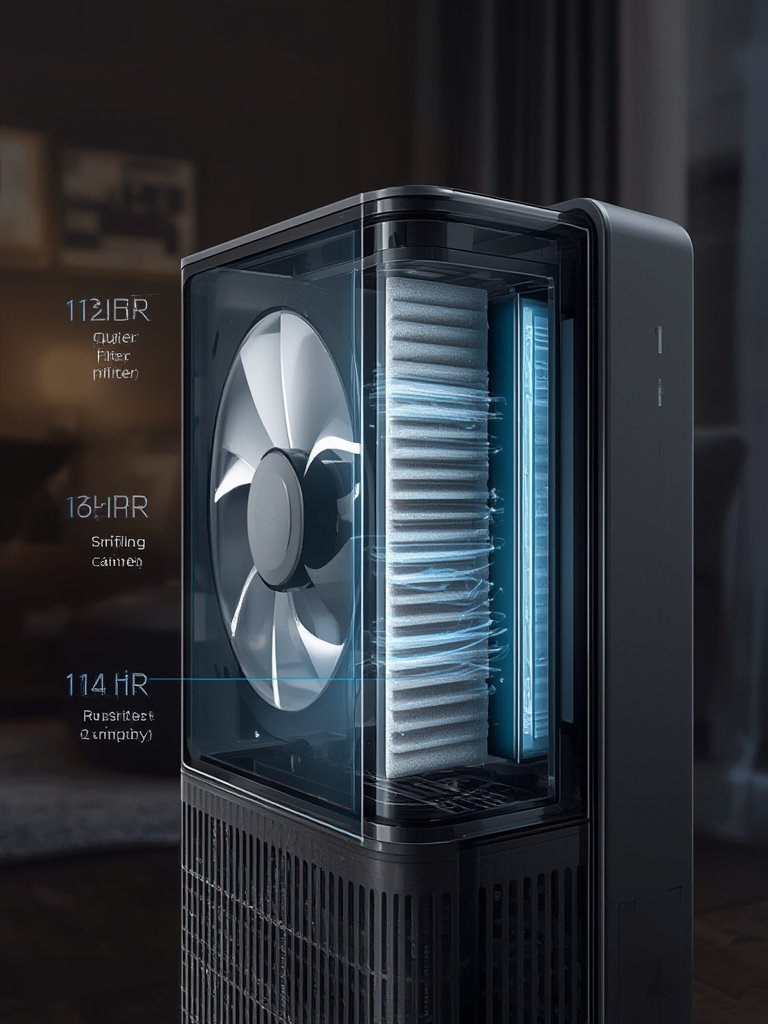
Many quiet air purifier shoppers, especially parents or city dwellers, run into the same costly mistakes. Independent test results and buyer reviews highlight these common pitfalls:
- Treating ultra-quiet as ultra-effective: Units advertising 20–24 dB are often “barely moving air” at this level. Expect cleaning to take 3 hours+ at these settings—compare this to <30 minutes at a true effective speed (source).
- Falling for big coverage claims: Many models claim “up to 2000 sq ft,” but this refers only to loudest settings. Room coverage shrinks dramatically on sleep modes (see specific test data below).
- Ignoring fan sound quality: Decibel readings alone hide differences in pitch; high-pitched “whir” or turbine whine disturbs far more than deeper “pink” or broad-band noise of similar dB.
- Forgetting long-term reliability: Users report increased noise from filter clogs, worn bearings, and issues like fan vibration or rattling after several months. (Replace filters regularly and avoid moving the unit while running.)
- Underusing maintenance or ignoring setup errors: Failing to seat the HEPA filter or closing air intakes raises both noise and reduces real CADR.
| Model | Low dB (Sleep) (Tested) |
High/Useful dB (Tested) |
CADR at Useful Setting (cfm / Clean Time) |
Notes |
|---|---|---|---|---|
| Alen BreatheSmart 45i | 23 | 49 | 225 cfm (Smoke) / max setting | Very quiet on low, but real cleaning at >40 dB (source) |
| Coway AirMega 400 | N/A | <40 | 350+ cfm (measured at <40 dB) | Best CFM/dB ratio in lab tests (source) |
| Honeywell AirGenius 5 | 45.2 | 57 | <100 cfm at lowest speed | Quietest mode low cleaning (source) |
| SA600-class (HouseFresh Lab) | N/A | <40 | 128 cfm (PM1) at 5×/hour in 192 sq ft room | Clears typical bedroom in under 25 min at <40 dBA (source) |
Certifications like AHAM (CADR rating) and ENERGY STAR (efficiency) do not regulate sound. Instead, seek out honest reviewer comparisons of noise and real cleaning at the fan speed you’ll actually use. For more background on air purifier certifications, check our comprehensive air purifier checklist.
To avoid typical headache scenarios, also see our HEPA air purifier buyer’s guide and best air purifier 2024 picks for curated recommendations.
Conclusion & final buying checklist
Choosing the right quiet air purifier for peaceful, effective overnight use means prioritizing both low noise and true cleaning power. Don’t fall for the lowest dB claim alone—insist on CADR and air changes per hour at the decibel level you’ll actually tolerate while sleeping. Recommended steps:
- Target <40 dBA on your chosen fan speed; ask for measured CADR at that exact setting.
- For small bedrooms: aim for at least 4–5 ACH (example: 120–150 cfm for a 192 sq ft room).
- Request “pink noise” or sound-profile tuning if you’re sensitive to pitch, not just loudness.
- Prefer models with EC motors, smart controls, and filtered, “silent” or “night” modes, but always verify cleaning time in those modes.
Our top specific picks from real-world lab and reviewer data:
- Budget/small bedroom: Choose a mid-sized HEPA unit rated at 120–150 cfm at <40 dBA, such as the models reviewed on HouseFresh and ConsumerAnalysis. See guide
- Midrange room, balance cost and silence: Alen BreatheSmart 45i delivers good cleaning at “medium” (38–40 dBA), proven by independent tests. See more picks
- Premium/large room, maximum quiet: Coway AirMega 400 sets the standard for highest CFM per dB—best for large bedrooms or wildfires when peaceful night cleaning matters most (see review).
Quiet air purifier selection is a data-driven process. Trust independent measurements and don’t settle for marketing claims. For detailed model specs by use case, visit our curated air purifier for home guide and our smart air purifier buying guide. Clean air, quiet sleep—no more trade-offs. Ready to sleep better? Get started by matching your room, noise need, and tested CADR today.
FAQ
What is a “quiet air purifier” in real-world terms?
It’s a purifier that stays under 40 dBA at a speed that still delivers 4–5 room air changes per hour—about as loud as a quiet library or soft fan. Look for tested CADR at this volume, not just low-noise marketing claims.
Why does my air purifier seem louder at night?
At night, your brain is more sensitive to small noises and high-pitched tones. Models with “auto” mode can also suddenly jump fan speed due to sensor readings, causing unpleasant noise spikes.
Is quiet mode always the best for overnight air cleaning?
No—quiet or sleep mode can drastically reduce CADR and take hours to clean a room. For wildfires or allergy peaks, choose a slightly higher speed that balances comfort and effectiveness.
Do certifications like AHAM or ENERGY STAR guarantee quiet operation?
No. AHAM certifies cleaning performance (CADR) and ENERGY STAR focuses on energy use. Neither directly rate sound—always check independent tests for noise at a setting that suits your needs.
What is “pink noise” and why do some air purifiers advertise it?
Pink noise spreads sound energy evenly across frequencies, making fan sounds less sharp and less likely to disturb sleep. Some premium models tune their motors and fans to produce this instead of a high-pitched whine.