

Air purifier with washable filter is a feature on many modern room air cleaners promising lower waste and ongoing savings—but does it really work well enough for allergy relief, dust, or pet hair? This guide breaks down realistic pros, cons, and what to check before you buy. Skip the fluff—here’s the actionable, data-backed truth for busy, budget-smart buyers like Emma.
Key Takeaways
- Washable filter models cost less in the long run and reduce waste, but usually don’t match HEPA for serious allergy or smoke removal.
- Maintenance is more hands-on—expect frequent cleaning and a real risk of performance loss or odors if you neglect the filter.
- 2024 models add smart sensors, apps, and hybrid designs, but washable filters are best for dust and pet hair—not for heavy allergy homes or VOC concerns.
- Quick takeaway — should you buy an air purifier with washable filter?
- How washable filters work vs how true HEPA works
- Real-world effectiveness: allergens, particulates, and VOCs
- Most common user complaints (Amazon / Reddit / Trustpilot — past 12 months)
- 5‑year total cost of ownership (TCO) — realistic comparison
- Maintenance: step-by-step cleaning protocols and timeline
- What happens if you neglect maintenance — concrete consequences
- 2024 model innovations and useful features to prioritize
- Three critical buyer concerns most articles fail to answer (and how to test them yourself)
- Practical buying checklist — pick the right model for your needs
- Quick FAQs and final recommendation
Quick takeaway — should you buy an air purifier with washable filter?
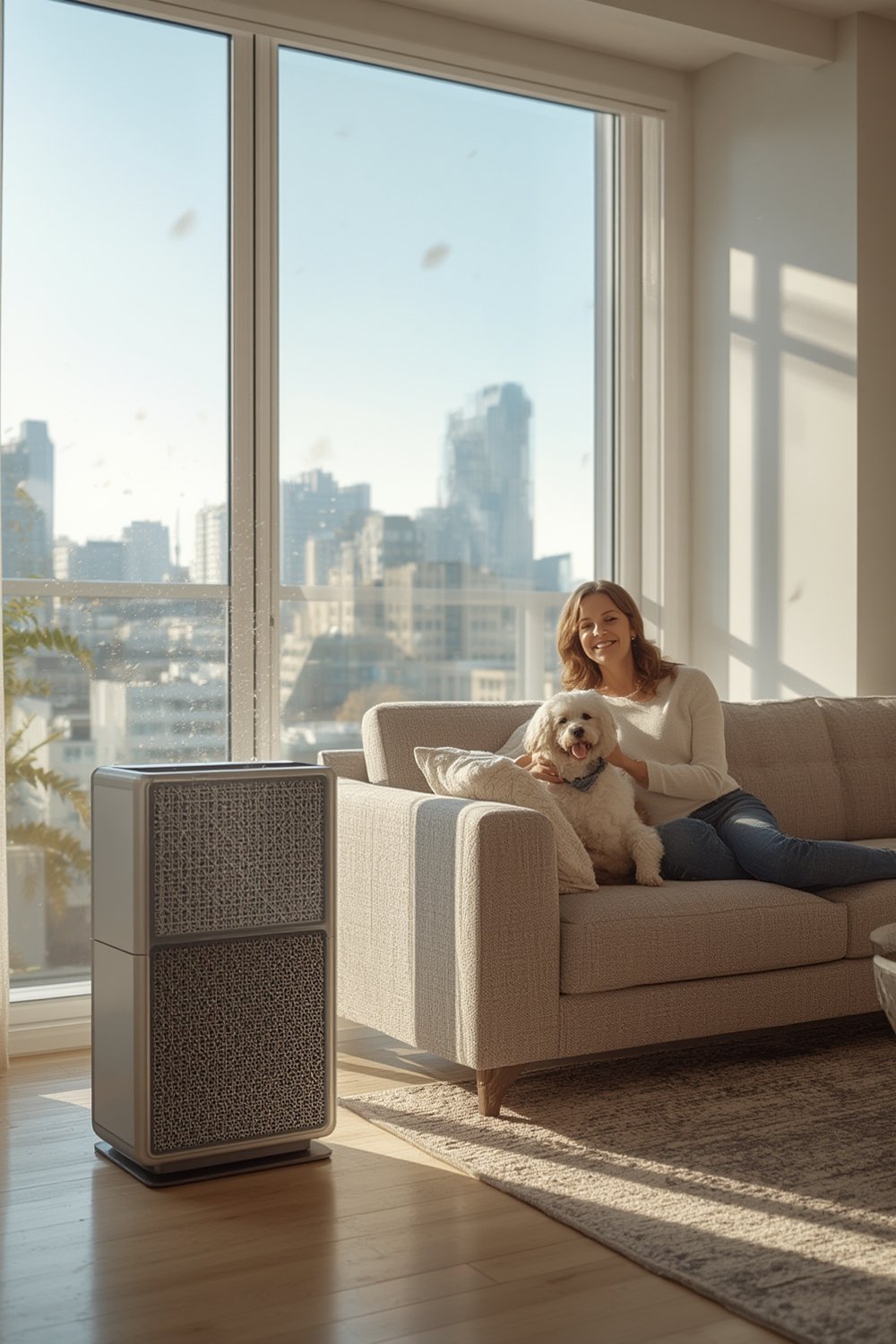
If you want lower ongoing costs, dislike throwing away filters, and mostly need to tackle large dust, pet hair, or visible particles, an air purifier with washable filter can make financial and environmental sense. This is especially true for pet owners or busy city-dwellers who aren’t dealing with major allergies or wildfire smoke.
But for severe allergies, asthma, living with smokers, or tackling VOCs (chemical fumes), washable filters just can’t match certified true HEPA with substantial activated carbon. Despite growing interest, 2024 industry data shows HEPA still rules, with a ~40% market share, and washable options remain a niche focused on sustainability—not maximum health protection.
How washable filters work vs how true HEPA works
Washable filters are usually coarse mesh or electrostatic layers that trap dust, lint, pet hair, and some larger pollen grains. Electrostatic washable filters can attract fine particles, but after each wash, their charge and structure break down a little—reducing effectiveness. They are not built to meet the true HEPA standard (99.97% removal of 0.3 micron particles).
True HEPA filters use deeply pleated microfiberglass or synthetic media. They’re not washable—water will ruin them. Their dense, static-charged fibers trap tiny allergens, smoke, and even bacterium. HEPA’s efficiency, especially for PM2.5 (ultrafine airborne pollution), remains unmatched by any reusable consumer media. That’s why most air purifier with washable filter models target people who are more concerned about visible dust than fine allergens or smells.
Real-world effectiveness: allergens, particulates, and VOCs
Washable filters do a fine job with what you see: pet hair, lint, most pollen, and household dust. But when it comes to invisible threats—PM2.5 (ultrafine particles), wildfire smoke, and much of what triggers allergies or respiratory symptoms—they come up short. Most washable filters remove 90–99% of large dust, but rarely achieve even 80% on fine PM2.5.
For VOCs and odors from chemicals, paint, or cooking, washable filters are usually no match—even if a washable carbon layer is added, it’s far less effective than a thick, replaceable carbon block. Only a few hybrid designs (washable prefilter plus snap-in HEPA modules) offer any meaningful gas removal—and most washable-based models just don’t compete with best-in-class HEPA systems (see the air purifier for allergies guide for calibrated stats).
Most common user complaints (Amazon / Reddit / Trustpilot — past 12 months)
Real buyers, especially on Amazon and Reddit, highlight recurring frustrations with air purifier with washable filter designs:
- Frequent cleaning—weekly to monthly rinsing needed, with drying downtime up to 24 hours. Users find this much more hassle than changing a cartridge.
- Drop in performance after repeated cleaning; airflow or visible air cleanliness may get worse, especially after several wash cycles.
- Odors: Musty, moldy, “wet dog” smells if filters aren’t 100% dry before reinstalling. Some report visible mold growth inside the filter frame.
- Marketing confusion: “HEPA-type” claims on washable units without actual HEPA certification. Many feel allergy or asthma benefits fall flat compared to their previous disposable HEPA purifier.
- Noise: Many models get loud if run at higher speeds but still underperform HEPA rivals for the same price.
- Durability: Filter frames warp, crack, or loosen from repeated cleaning. Electrostatic mesh can tear or mat after some scrubbing.
- Poor odor/VOC removal—thin, washable carbon coatings rarely help with smoke, fumes, or persistent smells.
These complaints match most recent expert review summaries and ongoing discussions on Reddit. If easy, low-fuss filtration is critical for you, these issues matter. For more user-based product picks see the best air purifier 2024 selection.
5‑year total cost of ownership (TCO) — realistic comparison
What will you actually spend over five years for air purification? Washable-filter units have a clear edge on price—if you keep up with maintenance:
| Device Type | 5-Year Purchase & Energy | Filter Costs | Total TCO | Allergy/PM2.5/VOC Performance |
|---|---|---|---|---|
| Washable Filter Purifier | $150–300 (device) + $125 (energy) | $0–80 (some need a replacement ~year 3–5) | $275–550 | Good for visible dust and hair; modest for allergens/odors |
| HEPA + Carbon Purifier | $200–400 (device) + $125–175 (energy) | $200–600 (regular filter sets) | $525–1175 | Best for allergies, smoke, VOCs |
For Emma and buyers like her, air purifier with washable filter units can pay for themselves if your main concern is dust, pet dander, or big particles—and you’re willing to clean them yourself regularly. See hybrid reviews on the smart air purifier buyers guide for models that mix washable and disposable options.
Maintenance: step-by-step cleaning protocols and timeline
To keep an air purifier with washable filter working as promised (and not growing mold), follow this routine:
-
Prefilter (Coarse mesh for hair/dust):
- Clean every 2–4 weeks if you have pets or live in a dusty area; every 1–3 months otherwise.
- Turn the purifier off and unplug it. Carefully remove prefilter to prevent dust spill.
- Vacuum gently with a soft brush attachment.
-
Main Washable Filter:
- Clean every 1–3 months, or as soon as you see visible dust or the “clean” indicator reminds you.
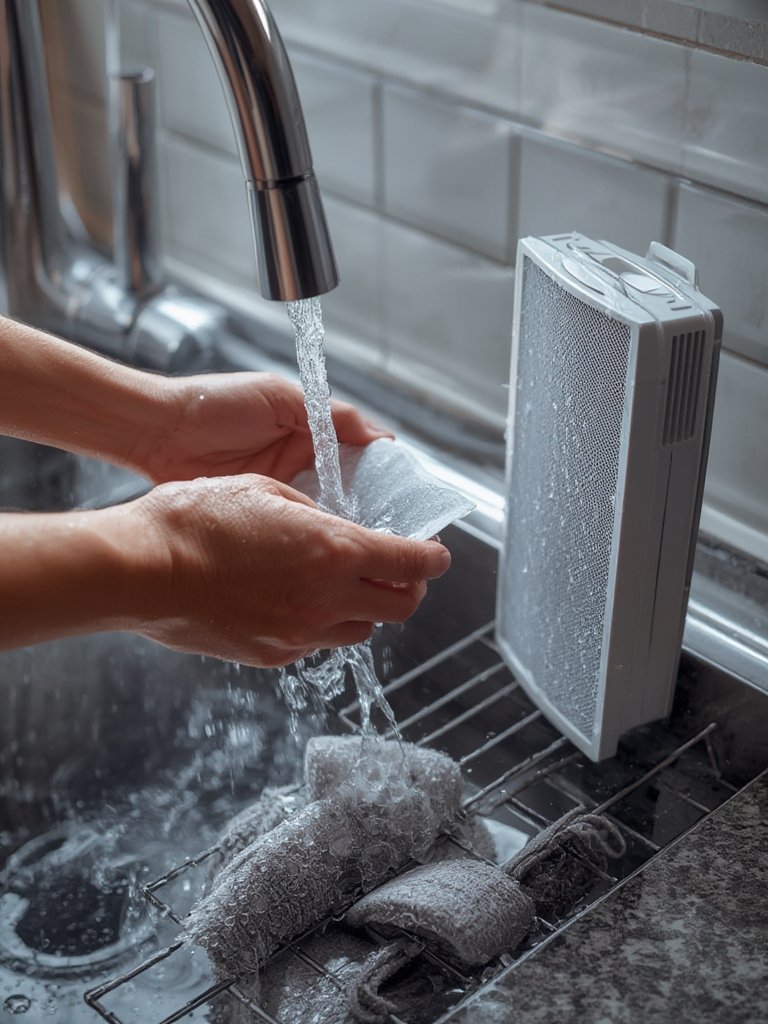
- Rinse under lukewarm water (clean side out), using mild detergent only if the manual allows.
- NO bleach, harsh chemicals, or hot water—these break down filter fibers and electrostatic media.
- Lightly agitate or brush if needed, but never scrub hard.
-
Dry Thoroughly:
- Shake off excess water, set in a ventilated room. Never use heat dryers, ovens, or direct sun.
- Wait 12–24 hours, until fully dry—any moisture = mold risk.
- Reinstall only when bone dry, checking filter seals are intact.
Avoid all strong cleaning products, alcohol, or abrasive pads—these will shorten filter life and can destroy the media’s ability to trap dust by ruining its electrostatic performance. For more on filter handling, check out our essential air purifier buying checklist.
What happens if you neglect maintenance — concrete consequences
If you slack on cleaning, clogged washable filters do worse than nothing—they get smelly, noisy, and waste lots of energy:
- Pressure drop & reduced CADR: Dust buildup means weaker airflows, so your purifier runs harder, while actually cleaning less.
- Higher noise & power use: The motor strains to force air through clogged media—expect more noise, heat, and electricity bills.
- Mold, biofilm & odors: Damp filters grow mildew. Any surviving bacteria or spores can get blown into the room (the opposite of protection).
- Shorter filter lifespan: Skimped maintenance means you’ll have to buy replacement “lifetime” filters much sooner, killing the savings.
- Possible IAQ downgrade: In extreme neglect, some users report their homes actually feel stuffier or dirtier than before, with odors or allergy flare-ups returning.
2024 model innovations and useful features to prioritize
The newest air purifier with washable filter systems have evolved. Consider these features, especially if you want true value:
- Smart sensors for PM2.5 or VOCs, with app integration—track real air quality, not just alert lights
- Auto-modes and accurate sensors: Adjusts fan speed automatically, provides cleaning alerts
- Quiet sleep modes (18–25 dB): For bedrooms and nurseries, check tested noise specs
- Modular filters: Washable prefilter plus add-on (optional) snap-in HEPA or thick carbon module—best for those wanting lower waste but serious filtration
- Hybrid reusable/disposable stacks: Swap just the carbon or HEPA layer, not the whole assembly
- Maintenance reminders via timers or apps
These trends echo what’s on display in smarter picks from our smart air purifier buyers guide and support more flexibility for urban, eco-conscious buyers. For source details, see 2024 market research reports.
Three critical buyer concerns most articles fail to answer (and how to test them yourself)
- Does filter performance degrade after repeated washing?
Very few brands tell you how filtration changes after 10, 30, or 50 cleans. Try tracking pre/post-PM2.5 levels with a consumer air quality monitor after each monthly wash. If you see performance decline, consider early replacement. - Mold risk from poorly dried filters?
If a filter smells musty, assume it’s unsafe. Regular nose and visual checks matter. If in doubt, soak in mild detergent (never bleach), rinse thoroughly, and bring into direct sunlight for a natural disinfectant—still, always dry completely. - Real cost/performance vs. HEPA/carbon?
Log your filter cleaning effort, monitor air quality, and track actual spend. If allergy symptoms persist or you notice little difference in PM readings with the device on, consider if your savings are worth weaker filtration. Full breakdowns and scenario calculators are available in our HEPA air purifier buyer’s guide.
Independent lab-proof is rare, but these DIY tactics help any buyer make a more informed call on longevity, safety, and true value in use.
Practical buying checklist — pick the right model for your needs
- What are your pollutant priorities? (dust/hair or also smoke, VOCs, or allergens?)
- What’s your room size? Confirm CADR rating matches coverage.
- Does the unit offer a (true) carbon or HEPA add-on module, or only washable filters?
- How much time are you realistically willing to spend on cleaning?
- Are spare filters or frames sold separately, in case of damage?
- Are sensor readouts trustworthy (particulate, air quality)? Check for app telemetry if tech appeals to you.
- What’s the stated filter lifetime (in washes or years)? Warranty terms?
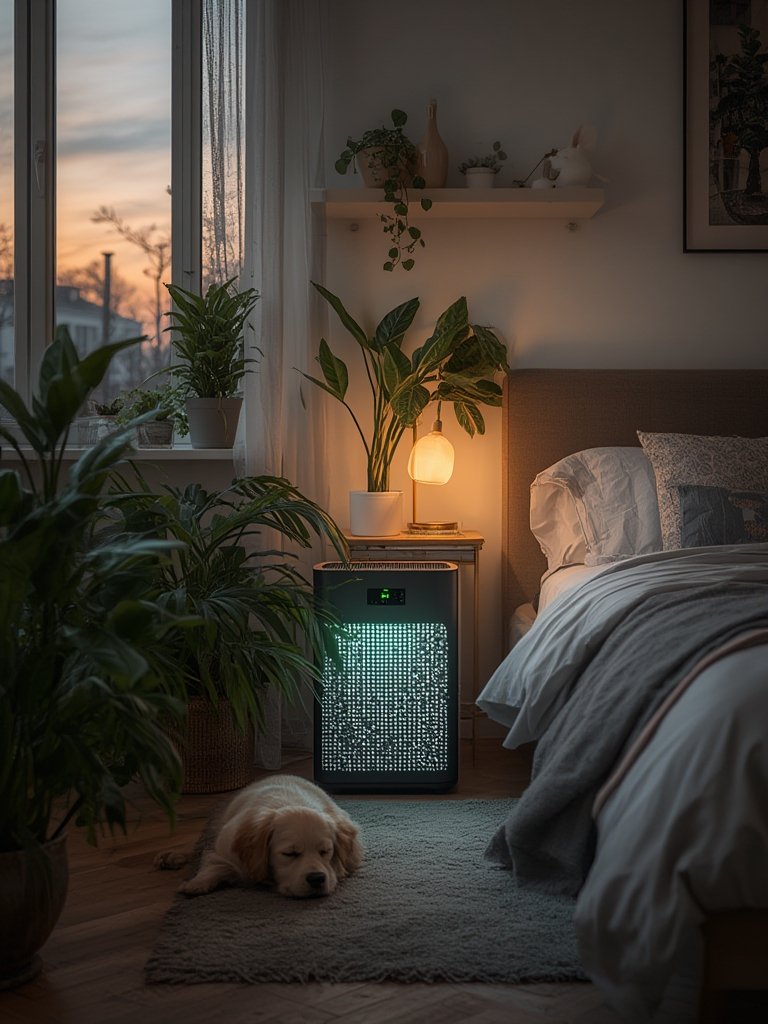
Portable models account for most sales (66.4% of market revenue), so expect most best picks to target bedrooms, nurseries, or open-plan living. For pet-specific performance and clear maintenance, see air purifier for pet hair reviews.
Quick FAQs and final recommendation
Can an air purifier with washable filter replace a true HEPA unit?
No—most washable filters capture big dust, lint, and hair, not the finest allergens or PM2.5. For serious allergies, classic HEPA is best.
How often do I need to clean a washable air purifier filter?
Prefilters: every 2–4 weeks if pets or dust are present, else every 1–3 months. Main filters: every 1–3 months at minimum. If you notice a musty odor, clean immediately.
Can I use bleach or alcohol to disinfect my washable air filter?
Usually not—stick to mild soap or detergent only. Bleach, alcohol, or harsh cleaners will destroy most washable filter media and can cause dangerous breakdown.
Is a washable-filter purifier worth it financially?
If you prioritize dust and hair, and commit to routine cleaning, you’ll probably spend $275–550 across 5 years (vs $525–1175 for disposable HEPA). But know you’re trading off some filtration performance.
Is there a truly “set-and-forget” washable air purifier?
No—every washable unit needs hands-on cleaning. If you want hands-off operation, a disposable cartridge-based model is easier to own.
Final recommendation: If you’re mainly fighting visible pet hair, dust, and want to avoid throwing away filters, a modern air purifier with washable filter model is a smart, sustainable choice—as long as you’re willing to clean it often. For allergy-prone or immune-sensitive users, high-performance HEPA and carbon units are still the standard. Want personalized picks by room size and allergy profile? Check the air purifier large room page or our portable air purifier buying guide next.