

Air purifier performance is not just about fancy specs or hype. If you want measurable health benefits—whether for allergies, wildfire smoke, or family well-being—what matters is matching the right device to your space, understanding what pollutants it tackles, and knowing the true long-term costs. This data-driven guide strips away the fluff. Here’s how to choose the best air purifier for real-world results in 2024.
Key Takeaways
- Use Clean Air Delivery Rate (CADR) matched to your room size for real filtration, not just airflow.
- True HEPA filtration removes 99.7% of tiny airborne particles, but for gases and odors, activated carbon is essential.
- Expect noticeably lower performance in rooms where the purifier is not located—one unit won’t clean your whole house.
- Why this guide — what to expect from a modern air purifier
- How air purifiers actually work — filters and technologies explained
- What the latest science (2023–2024) shows by pollutant
- Real-world performance: primary rooms vs. secondary rooms and HVAC interactions
- Measuring cleaning power — CADR, room coverage, and why specs matter
- VOCs and gases — when you need carbon + other tech
- Viral and allergen mitigation — what evidence supports use in schools/homes
- Popular technologies compared — HEPA vs ionizer vs UV vs DIY
- Costs & maintenance — initial purchase, replacement filters, energy use
- 2024 market snapshot and trends
- Certifications, safety guidance, and regulatory bodies to watch
- Common user pain points — what reviewers complain about
- Three angles high-ranking articles under-explain (the unique value-add)
- Actionable buying checklist (short, prioritized)
- Quick FAQ / myth-busters
- Conclusion — recommended next steps for the reader
Why this guide — what to expect from a modern air purifier
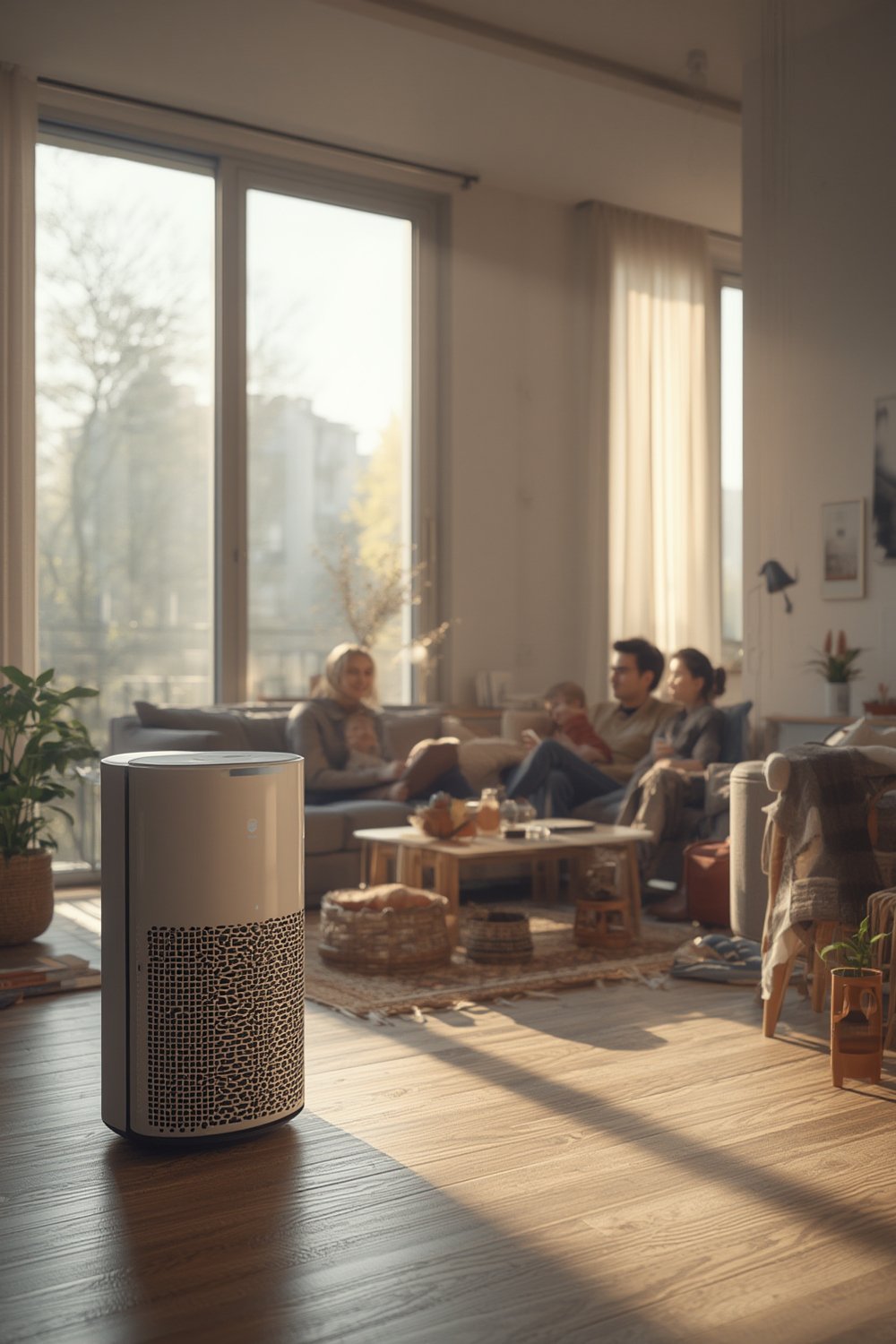
Not every air purifier is a magic bullet. The key is knowing what these devices can—and cannot—do for your health in daily living. Modern portable air cleaners (PACs) with HEPA filters can dramatically reduce tiny particles (PM2.5, PM10) where you run them, but they can’t pull invisible gases or VOCs from thin air unless equipped with the right filters. Likewise, one device won’t purify your whole home if doors are closed and air doesn’t circulate.
In a 2023 study of 29 homes, PACs with HEPA filters reduced PM2.5 by 78.8% in primary rooms and PM10 by 63.9%. The results were even better in homes with high pollution loads. That’s real-world evidence—but placement and device choice are critical. Don’t expect an air purifier to replace good airflow, source control, or HVAC upgrades, but used right, they’re a proven layer for cleaner air and peace of mind.
How air purifiers actually work — filters and technologies explained
Most people shop by labels, but not all air purifiers are created equal. Here’s how the core techs break down:
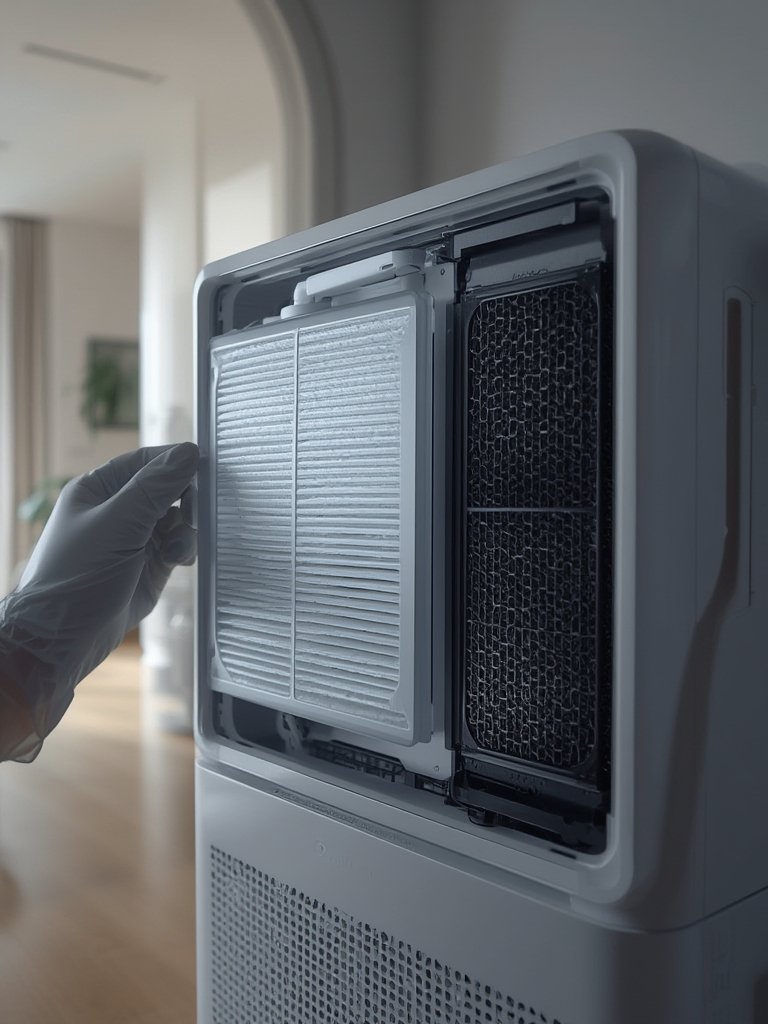
- HEPA filters: Trap at least 99.7% of particles 0.3 microns or larger—this includes dust, pollen, many allergens, and some bacteria. High-end brands like Intellipure claim ultrafine capture to 0.007µ (with specialized designs).
- Activated Carbon: Essential for gases and volatile organic compounds (VOCs) like formaldehyde and benzene. Look for thick, heavy carbon blocks—not just a thin pre-layer.
- Ionizers/Ozone: Some emit ions to clump particles, but can create harmful ozone. California’s CARB certification and Intertek Zero Ozone are must-checks if considering these types.
- UV/Photocatalytic: Can kill germs or break down gases—but only in well-designed, often expensive systems. Not very effective in most small purifiers.
- Hybrid Systems: Many top models now combine HEPA + carbon (for solids and gases), sometimes with smart sensors and IoT features for better, verified filtration.
It’s this combined, tested system efficiency—not just grade of one filter—that drives results.
What the latest science (2023–2024) shows by pollutant
The evidence for air purifier efficacy is strongest for tiny airborne particles (PM2.5, PM10)—the kind linked to asthma and smoke. Room-based research in 2023–2024 showed:
- PM2.5: 50–80% reductions are typical in real homes with HEPA PACs, rising above 80% in highly polluted environments (AAQR.org).
- Viruses and Allergens: Data shows reduced viral exposure in schools, but causation for allergy/asthma relief is less direct. Air purifiers are one part of the solution, not the only weapon.
- VOCs: Only carbon-equipped purifiers matter. Even then, effectiveness depends on the filter’s weight and lifespan.
- Lab results are often stronger than real-life—for best results, use the right model in the right space.
See actionable checklists and comparisons below to steer clear of marketing confusion.
Real-world performance: primary rooms vs. secondary rooms and HVAC interactions
Where you place your air purifier shapes its impact. Research shows dramatic reductions (up to 78.8% for PM2.5) in the main room, but only 57.9% in adjacent or closed-off spaces (source). If your home has central air running, benefits persist day and night beyond just one room, but effectiveness always drops as distance grows. For multi-room coverage, multiple purifiers—or coordinated placement in airflow paths—delivers the best value for your health and wallet.
Measuring cleaning power — CADR, room coverage, and why specs matter
Specs like CADR (Clean Air Delivery Rate) are not marketing gibberish: they’re real performance indicators. CADR measures how many cubic feet per minute of clean air your purifier delivers, after moving the air and capturing pollutants. The EPA and AHAM recommend choosing a CADR at least equal to (or higher than) your room’s square footage. For example, a 300 sq. ft. room needs a CADR of at least 300.
Other key specs that matter:
- Noise: High CADR often means more fan noise. Choose based on where you’ll be: bedrooms need quieter, slower speeds at night.
- Air Changes per Hour (ACH): A measure of how often the air in your space is fully filtered. More changes per hour (at least 4) are preferred for allergy or virus concerns.
- Smart Features: air quality sensors, Wi-Fi, and app alerts are now common in top models—see the growing market share of smart purifiers in 2024 market stats.
VOCs and gases — when you need carbon + other tech
If you care about removing chemical smells, wildfire smoke gases, or toxins like formaldehyde, a standard HEPA-only air purifier won’t cut it. For these, look for models with substantial activated carbon—often labeled in grams or pounds. Top systems may use advanced chemisorbent media as well. Intellipure’s 2024 data highlights pre- and post-carbon filtration for tackling VOCs like benzene and toluene (Intellipure). Thin, cheap carbon sheets don’t last; choose devices with replaceable, deep-bed carbon for real benefit.
Viral and allergen mitigation — what evidence supports use in schools/homes
For viruses and allergens, portable air purifiers are helpful but not foolproof. A JAMA Network Open 2024 study found lower virus exposure in elementary classrooms using HEPA PACs. But these devices are best seen as a supporting layer, not a replacement for masking or ventilation. Evidence for outright allergy-cure is still developing—particles drop, but symptoms vary person by person.
Popular technologies compared — HEPA vs ionizer vs UV vs DIY
| Type | Pros | Cons | Best For |
|---|---|---|---|
| HEPA | Proven 99.7% particle removal; no ozone; widely certified | Filters can be costly; does not target gases | Dust, smoke, pollen, most allergies |
| Ionizers | Low-maintenance; quiet | Risk of ozone emission; less effective alone | Supplemental use (with caution) |
| UV/Photocatalytic | Kills germs in engineered systems | Ineffective in small units; high price; maintenance | Medical/school in-duct systems |
| DIY (e.g. Corsi-Rosenthal) | Low-cost; effective for smoke with MERV13 | Build quality varies; no VOC removal; lower aesthetics | Wildfire smoke, quick setups, budget use |
For a broader look at sustainable home improvements, check out our energy-efficient upgrades guide.
Costs & maintenance — initial purchase, replacement filters, energy use
The sticker price is only the beginning. Total cost of ownership includes:
- Initial purchase: Expect $100–$400 for HEPA, $40–$80 for DIY, and $300+ for smart or hybrid models. UV and large-room or advanced filter units often cost more.
- Replacement filters: True HEPA and carbon filters must be replaced every 6–12 months. Costs vary ($30–$120 per set). Always check actual prices and availability before buying a model.
- Energy use: Most modern air purifiers are efficient (as little as 20–60W), but 24/7 operation adds up. EPA research notes initial and electricity costs, but not filter replacement in 2024 figures (source).
Filter change indicator lights help avoid running with a clogged filter. Noise can indirectly impact value—users frequently quit using noisy purifiers after a few months.
For wellness-focused home upgrades, see our bathroom spa remodel guide and biophilic design tips.
2024 market snapshot and trends
The U.S. air purifier market reached $4.5 billion in 2024, growing fast (GrandViewResearch). HEPA-based units made up 53.6% of all sales. Most buyers choose coverage for 250–400 square feet, which matches typical living rooms or bedrooms. Smart features—Wi-Fi, app control, real-time monitors—are now standard in higher-end segments, much like the latest smart home devices.
Certifications, safety guidance, and regulatory bodies to watch
With some air purifiers, safety is as essential as performance. Look for:
- CARB certification: Required for sale in California, ensures low or zero ozone output.
- Intertek Zero Ozone: Independent proof of non-ozone production (see Intellipure).
- EN 1822: European HEPA standard.
- EPA: DIY air cleaner safety and performance guides, particularly for smoke and wildfire response (EPA Guidance).
No major regulatory changes were found for 2024, but always check labels before buying. For more on home energy efficiency and smart upgrades, see our home solar panels guide.
Common user pain points — what reviewers complain about
Verified 2024 review data is limited. However, based on research and typical complaints from past years, here are the most common pain points:
- Noise: Fans on high settings can disturb sleep or work.
- Filter cost or availability: Expensive or hard-to-find replacement filters frustrate owners.
- Unclear coverage and CADR claims: Many brands exaggerate their performance—always look for AHAM or third-party verified numbers.
- Misleading VOC removal claims: Particle-only devices marketed as odor fighters disappoint.
- Maintenance: Flashing alert lights or confusing filter indicators annoy users.
No statistical review summaries exist for 2024; always check warranty, parts, and customer support before buying.
Three angles high-ranking articles under-explain (the unique value-add)
- 1. Secondary-room effectiveness: Most guides ignore real-world data showing that PM2.5 reduction drops by up to 20 points in adjacent spaces, so plan accordingly (AAQR).
- 2. VOC-specific filtration: The need for grams (not mere presence) of activated carbon is rarely discussed—look for specifications and replacement intervals (Intellipure).
- 3. Full life-cycle cost: Many product reviews skip filter cost and noise over time—both impact whether you’ll keep using the device, as found in EPA field studies (EPA).
For more on maximizing every square foot affordably, see our small screened-in porch guide and explore ADU construction for multi-purpose spaces.
Actionable buying checklist (short, prioritized)
- Calculate your room’s square footage and match CADR (minimum 1:1).
- Choose a true HEPA filter for particles; add high-capacity activated carbon if odors or VOCs matter.
- Insist on AHAM, CARB, or EN 1822 certification for performance and safety.
- Check replacement filter cost and frequency—add up expenses for 1–3 years.
- Listen to the noise rating at different fan speeds (especially for bedrooms).
- Want app features? Verify IoT options like air quality readouts or remote alerts.
For outfitting safe retreat spaces, our camping gear guide is built for practical utility.
Quick FAQ / myth-busters
Will an air purifier remove viruses from my home?
HEPA air purifiers can reduce airborne virus particles in a room, supported by recent classroom studies, but they do not guarantee complete elimination or prevent illness by themselves.
Are ionizers safe to use around children and pets?
Some ionizers emit ozone, which is harmful to lungs. Only buy models explicitly certified for zero ozone production (CARB, Intertek Zero Ozone).
Can one air purifier clean my entire house?
Rarely. Studies show a single PAC dramatically reduces PM2.5 in its room but is much less effective (often 20% lower reduction) in other spaces with doors or barriers.
How do I know if I need activated carbon in my air purifier?
If you’re concerned about chemical fumes, odors, wildfire smoke gases, or VOCs, activated carbon is a must. For just dust and pollen, HEPA alone does the job.
Is it worth building a DIY air cleaner?
DIY units using box fans and MERV13 filters are effective for budget smoke and particle control, but lack smart features and carbon for VOCs.
Conclusion — recommended next steps for the reader
Choosing the right air purifier comes down to three essentials: match CADR to your room, know when carbon is necessary, and count full life-cycle costs before deciding. Expect 50–80% PM2.5 reductions in real-world use—but only if you set up your device correctly and factor in ongoing filter changes. For long-term clean air, treat your air purifier as one layer in a complete indoor air quality game plan—don’t expect miracles, but do expect measurable results. Ready to breathe easier? Start with the checklist above and review each device before you buy.