

Air purifier for pet dander is a make-or-break search if you’re struggling with allergies but can’t imagine a home without your dog or cat. Pet dander is not just a nuisance—it’s a genuine health trigger that lingers in places you least expect. If you’re buying an air purifier hoping for real relief (without breaking the bank on filters and energy), this guide lays out the facts, steps, and unavoidable reality checks you need to know.
Key Takeaways
- True HEPA air purifiers reduce—but never completely eliminate—pet dander. Expect partial improvement, not miracles.
- Annual filter costs and extra maintenance add up, especially in pet-heavy homes. Plan for 6–9 month filter intervals, not annual changes.
- Placement, multi-unit strategies, and safe filter handling are essential for effective and safe dander reduction—don’t skip these steps.
- Why Pet Dander Is a Distinct Indoor-Air Problem
- Step-by-Step Setup Guide for Pet Owners
- Advanced Analysis & Common Pitfalls
- Conclusion
- FAQs
Why Pet Dander Is a Distinct Indoor-Air Problem
Pet dander isn’t just shed fur—it’s microscopic skin flakes, dried saliva proteins (like Fel d 1 from cats and Can f 1 from dogs), and even urine stuck to dust. These allergens are tiny, hitching rides on particles that range from about 1 to 20 micrometers. That means they’re small enough to float in your air as PM2.5–PM10 for hours, land on textiles, carpet, and furniture, and be stirred up by movement—even long after your pet’s left the room.
Research shows these particles are everywhere: nearly every home with a pet has measurable dander even after cleaning, and even homes without pets often have some because it travels so easily. HEPA purifiers, for reference, are tested to catch particles as small as 0.3 microns, covering the pet dander size range effectively.
So, what’s realistic? Air purifiers can lower airborne pet allergen levels, especially in bedrooms, but not erase the problem. You’ll still need cleaning and rules to keep symptoms in check.
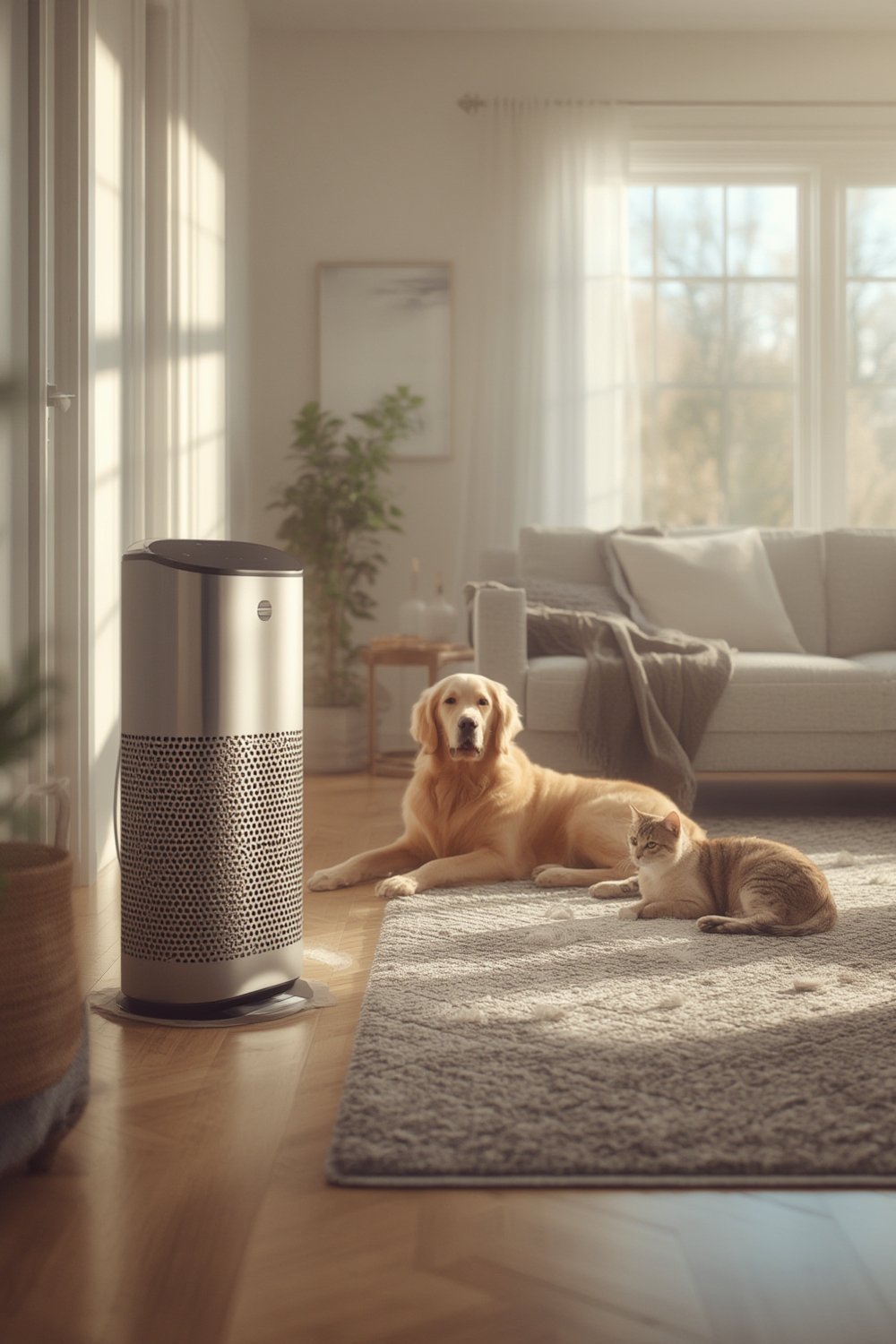
Step-by-Step Setup Guide for Pet Owners
- 1. Match Purifier Size to Your Room: Check the Clean Air Delivery Rate (CADR) and square footage claims. Bedrooms need priority. For a 200 sq ft room, target a dust CADR of at least 125+.
- 2. Pick TRUE HEPA (not “HEPA-like”): Confirm the filter is rated for ≥99.97% at 0.3 µm; MERV 13–16 HVAC can supplement but doesn’t replace a room HEPA unit.
- 3. Add Carbon for Odors, Not Dander: Activated carbon filters help with wet dog or litter smells, but do nothing for dander—allergen removal is the domain of HEPA.
- 4. Avoid Ozone-Producing Machines: Steer clear of ionizers or electrostatic models unless ozone production is proven to be undetectable.
- 5. Plan Filter Changes Early: Set a reminder for 6–9 month HEPA and 3–6 month carbon filter swaps if you have multiple or heavy-shedding pets. Expect double the frequency (and cost) compared to pet-free homes.
- 6. Strategic Placement: Place the purifier near dander “hot spots” (pet beds, litter boxes, main living areas), but away from walls or drapes that block air flow. Prioritize bedrooms for symptom relief at night.
- 7. Run the Purifier Continuously: Intermittent use gives dander time to resettle. Keep it on at least on a medium setting for constant filtration.
- 8. Supplement with Grooming and Cleaning: Wash pet beds and textiles weekly, bathe/groom pets regularly, and vacuum carpets (with a HEPA vacuum) at least twice a week.
- 9. Use Multiple Units for Large or Multi-Level Homes: In big spaces or open floorplans, one big purifier is not enough. Instead, use 2–3 smaller units near dander sources for better air exchanges per hour.
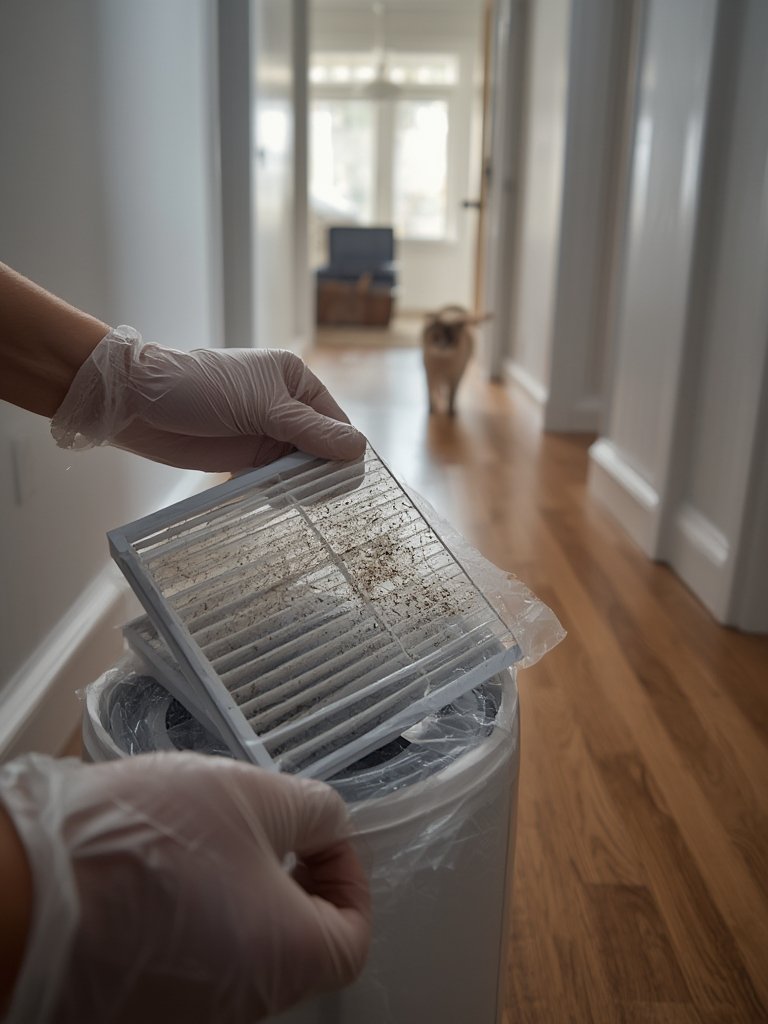
- 10. Check and Clean Pre-Filters Regularly: Pet hair clogs pre-filters fast. Vacuum or rinse these weekly to maintain airflow and extend the main filter’s life.
- 11. Map Out Airflow: Visualize the “flow” around furniture. Place the unit so it pulls air from where pets sleep and pushes clean air toward where you breathe (like your bed or couch).
For more details on smart purification, see our smart air purifier buyer’s guide.
Advanced Analysis & Common Pitfalls
Even the best air purifier for pet dander can underperform if matched incorrectly or used with unrealistic expectations.
Comparison: HEPA vs. Ionizer vs. Carbon for Pet Dander Removal
| Technology | Dander Removal | Odor Control | Ozone Risk | Replacement Frequency (Pet Home) | Notes |
|---|---|---|---|---|---|
| True HEPA | Excellent (≥99.97% of 0.3 µm) | None (for dander) | None | 6–9 months | Recommended by health agencies |
| Carbon Filter | None | Good (for odors/VOCs) | None | 3–6 months (if strong odors) | Supplemental only |
| Ionizer/PCO | Variable | Some (if with carbon) | Possible | N/A | Ozone caution—see source |
Common Pitfalls:
- Ignoring Room Size and CADR: Oversized claims lead to disappointment—always double-check the unit’s capacity.
- Underestimating Filter Costs: Many buyers are surprised by the need for frequent (and sometimes proprietary) filter changes, especially in homes with multiple or high-shedding animals.
- Poor Placement: Sticking a purifier in a blocked corner or too far from allergen sources will noticeably limit its effectiveness.
- Relying on “Auto” Modes or Sensors Alone: Many smart sensors underreport dander; trust your replacement schedule, not just indicator lights.
- Neglecting Safe Filter Handling: Allergens can be released into the air when handling dirty filters—always follow safe removal and disposal practices.
- Expecting Odor and Allergen Removal to Be Equal: Carbon removes odor, HEPA removes dander. Don’t confuse the two, and don’t judge purifier performance only by how fresh the room smells.
- False Sense of Security: Many homes keep high levels of dander in carpets and textiles; air purification must be paired with cleaning, washing, and pet access rules.
Still confused about purifier types? Our pet air purifier buying guide breaks down more options.
Cost Example #1: A one-bedroom apartment with a shedding cat uses a mid-range $250 purifier, $120/year filters, $40/year in electricity. Three-year TCO: ~$610.
Cost Example #2: A 2-story home, two dogs and a cat, uses two $300 units, $400/year filters, $100/year power. Three-year TCO: ~$1,700.
For more tips on multi-room coverage, check our air purifier for home guide.
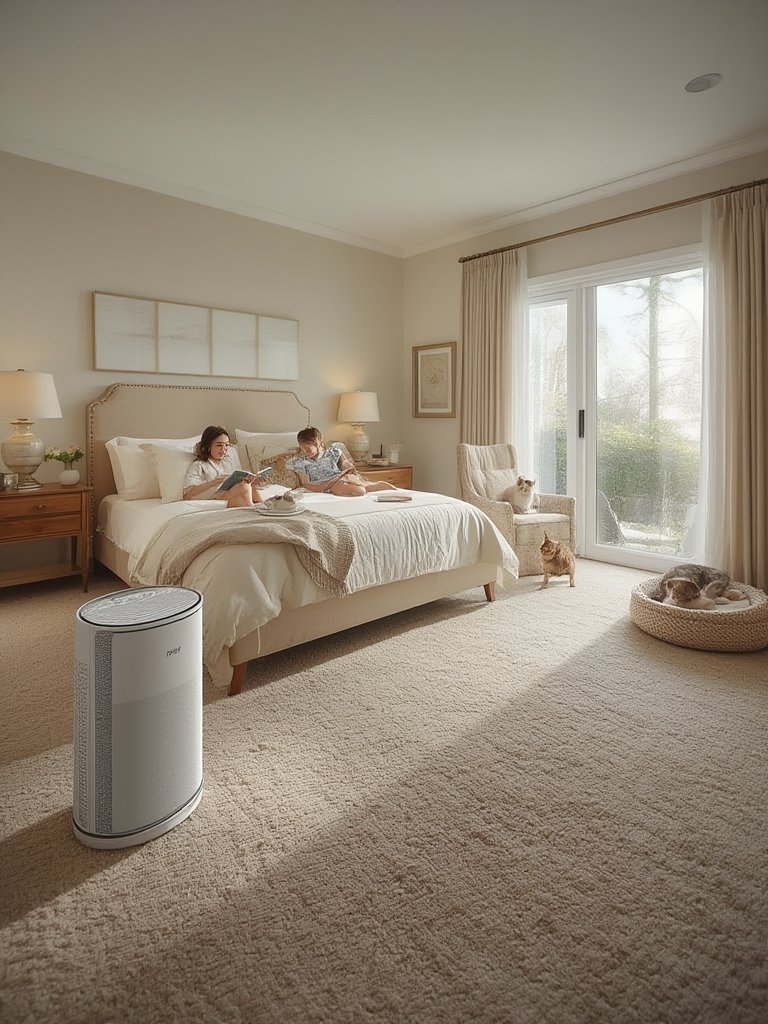
See more quiet options at quiet air purifier sleep performance if nighttime noise is a concern.
Conclusion
Living with pets and allergies isn’t all-or-nothing. The right air purifier for pet dander can make a meaningful difference when used strategically—matched to your rooms, combined with frequent filter changes, disciplined maintenance, cleaning, and clear rules. It won’t solve every problem but, used right, it gives you the best odds for keeping both your pets and your comfort.
Ready to act? Map your rooms, calculate your total cost of ownership, review your filter schedules, and make sure you’re following safe filter handling. For quick picks and room-matching charts, print our one-page checklist. Your allergies—and your pets—will thank you.
FAQs
Will an air purifier stop my allergies entirely?
No. Air purifiers reduce airborne pet dander by 40–70% in most rooms, but you’ll still need cleaning and strict pet rules. Only a combined approach offers meaningful, lasting symptom relief. Studies and guidelines from the American Lung Association confirm this.
How often should I change the filter if I have multiple pets?
In busy, multi-pet households, plan to change HEPA filters every 6–9 months, and carbon modules every 3–6 months. If your purifier smells musty, or looks more clogged than the schedule expects, change it sooner.
Are ionizers safe for pet dander?
Ionizers can generate ozone, which is harmful for both people and pets with allergies or asthma. Always choose mechanical HEPA purifiers with certified no/low ozone output. See scientific details from the Lung Association and NIEHS.
Do I need one or more units for an open plan or multi-story house?
Usually, yes. Open plans or homes with pets on multiple floors need at least one purifier per dander “zone”—meaning bedrooms, main living areas, and pet hotspots. It’s typically more effective to use two or more moderately sized units than one oversized one in such homes.
What percent of pet owners struggle with dander/allergies?
Research supports that about 20–25% of pet-owning households report problems with pet dander and allergies. Demand for effective solutions and pet retention (instead of rehoming) is rising through 2024. More at HABRI and the Animal Health Report.