

Energy-efficient upgrades can immediately slash your monthly utility bills—and in 2024, generous tax credits and rebates make many improvements pay for themselves faster than ever. If you’re ready to act, this guide cuts through confusion with clear, data-backed steps to help homeowners prioritize, price, and maximize their energy savings without surprises.
Key Takeaways
- Fastest returns: Start with a home energy audit, LED lighting retrofit, and insulation upgrade to see measurable savings in months, not years.
- Maximize incentives: The Inflation Reduction Act unlocked up to $8.4 billion in clean energy and efficiency tax credits in 2023–2024—qualify before funds shift.
- Structure matters: Bundle upgrades, vet contractors with a checklist, and use ROI-backed payback calculators to avoid regrets and surprise costs.
- Why prioritize an energy-efficient upgrades plan now
- Quick wins after a home energy audit — what to do first
- Top cost-savings & ROI numbers for 2024 — heat pumps, insulation, LEDs
- LED lighting retrofit — costs, payback, and how to scope the job
- Energy Star appliances — upfront costs vs lifetime savings (2024 rebates & tax credit effects)
- Heat pumps — realistic savings and where the biggest ROI comes from
- Solar panel installation — top homeowner concerns (payback, compatibility, maintenance) and hard numbers
- Home energy audit — common homeowner frustrations and practical solutions
- Smart HVAC systems in 2024 — performance, smart-home integration differences by brand
- Insulation upgrades — technical/legal guidelines, required standards, and available incentives
- Three upgrade strategies often under-explained by competitors (writer’s exclusives)
- How to estimate total project cost, net incentive value, and simple payback — a reproducible calculator approach
- Next steps: checklist, contractor vetting script, and CTA
- FAQ
Why prioritize an energy-efficient upgrades plan now
Energy-efficient upgrades are no longer just for eco-enthusiasts—they’re now a smart financial move. The Inflation Reduction Act has turbocharged homeowner incentives, making efficient choices more affordable and delivering quick impact on monthly bills. In 2023–2024 alone, more than 3.4 million families claimed over $8.4 billion in tax credits for clean energy and home efficiency improvements. Whether you want instant payback (like LED lighting or strategic air sealing) or are ready for bigger commitments (heat pumps, solar panels, or major insulation upgrades), timing your plan around rebates and prioritizing high-ROI projects ensures your dollars go farther. Start with a home energy audit so you’re not guessing—leave knowing exactly which upgrades to price out and how to sequence work for maximum incentives.

Quick wins after a home energy audit — what to do first
Book a reputable home energy audit as your first step—it will surface the cheapest, fastest payback projects in your house. Here’s a simple sequence for actionable results:
- LED lighting retrofit: Replace old bulbs and fixtures. Fast, low-cost, and an immediate energy bill cut.
- Air leak sealing: Target leaks around windows, doors, attic hatches, and ductwork. This is a DIY or pro job under $1,000 for many homes, often with a payback under one year.
- Insulation upgrade: Add or boost attic, wall, and crawlspace insulation for a step-change in comfort and savings.
- Efficient water heating: Consider heat pump water heaters or tankless for mid-tier investment and 20–50% energy reduction.
- Major investments: Price out high-efficiency heat pumps and, if roof/sun exposure allows, solar panel installation. Get 2–3 itemized quotes to compare pricing and eligible rebates, and stack local incentives with federal credits.
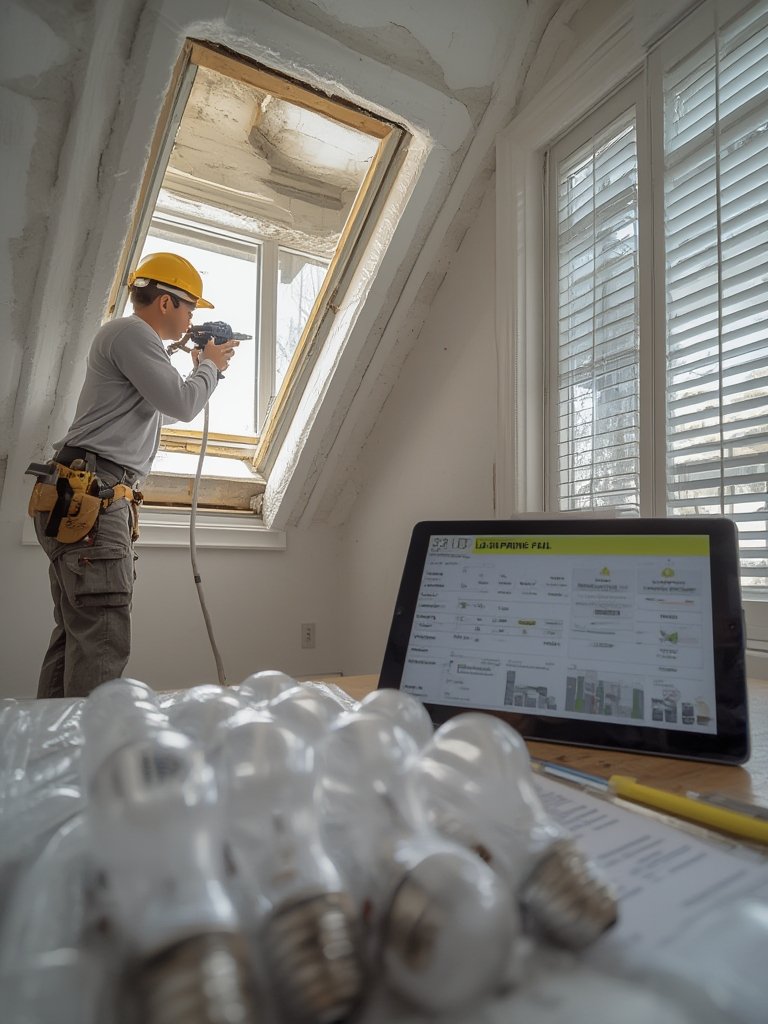
Top cost-savings & ROI numbers for 2024 — heat pumps, insulation, LEDs
How much do the biggest upgrade categories save you? Real 2024 data makes it simple for homeowners to compare ROI and payback for each approach. (Assumes average 2,000 sq. ft. home; your mileage may vary with climate and system type.)
| Upgrade | Typical Upfront Cost | Annual Energy Bill Savings | Expected Payback (Years) |
|---|---|---|---|
| LED lighting retrofit | $150–$800 | $60–$350 | 0.5–2 |
| Basic air sealing | $250–$1,200 | $70–$300 | 1–4 |
| Attic/crawl insulation upgrade | $1,800–$6,000 | $150–$700 | 2–7 |
| Heat pump (whole home) | $9,000–$24,000* | $600–$3,100** | 4–10 |
| Solar panel installation | $12,000–$32,000 | $2,230 (median) | 5–11 |
*Before federal/state rebates. **Depends on your old system; replacing electric resistance yields highest ROI.
For comparison, commercial owners saw up to a 9% ROI on major HVAC improvements in 2024. See source.
LED lighting retrofit — costs, payback, and how to scope the job
LED lighting retrofit—swapping old incandescent or CFLs for LED bulbs and fixtures—offer the lowest-risk, fastest payback of any energy-efficient upgrade. For most homes, you only need to map your fixtures and decide if a simple bulb swap suffices, or whether whole-fixture upgrades are justified (for kitchens, baths, recessed cans, etc). Payback periods routinely fall under two years; even less if you one-shot the upgrade during a sale or with a local rebate.
- Rule of thumb: Each traditional 60W bulb you replace with an LED can save $4–$7 per year if used 3+ hours daily.
- Bundle in dimmer compatibility planning if smart controls are on your wishlist—boosting utility and futureproofing.
- Use rebate portals to find instant-discount LEDs (utility and state rebates often stack with retail prices).
Research confirms: “LED lighting retrofits, air leak sealing, and insulation are classified as low-cost, quick-return improvements with fast energy savings and short payback periods.”
If you invest in smart bulbs or fixtures, integrate them early so you don’t duplicate work when upgrading to a smart home system.
Want more on upgrading comfort zones at home? Explore designs like a small screened-in porch or biophilic design for indoor-outdoor wellness benefits.
Energy Star appliances — upfront costs vs lifetime savings (2024 rebates & tax credit effects)
Deciding between Energy Star appliances and standard models? Here’s a no-nonsense template:
- Calculate the price premium (list price vs. similar non-Energy Star model).
- Subtract all eligible rebates, tax credits, and retailer/utility discounts. (2024 saw $8.4B in new credits claimed by homeowners—these can knock $75–$1,200 off high-efficiency appliances instantly.) See details from the U.S. Treasury.
- Estimate the projected energy cost difference over product lifetime (20–50% lower for most fridges, dishwashers, washers, and dryers).
Example: You pay $300 more upfront for a heat pump dryer compared to standard—but collect a $175 state rebate plus $250 federal credit. Over 10 years, you save $550+ in electricity. Net lifetime benefit: $675+ versus the non-Energy Star option.
For other energy-efficient upgrades, check out additional savings in the Home Solar Panels Guide.
Heat pumps — realistic savings and where the biggest ROI comes from
Efficient heat pumps give the highest ROI when replacing decades-old electric resistance heat, oil, or gas furnaces, especially with bundled weatherization upgrades. Upfront cost is meaningful—$9,000–$24,000—but incentives in 2024 offset up to 30%, and local programs sometimes add thousands more.
- Annual savings range: $600 (newer fuel-efficient home) up to $3,100 (old electric resistance or oil) per Treasury data.
- Payback usually ranges 4–10 years, depending on existing system, region, and incentives.
- Double-dipping: Combine with smart thermostats and zoning for even better returns by reducing wasted heating/cooling in unused rooms.
“Expected annual savings from heat pumps and efficiency upgrades range up to $3,100, depending on the system replaced.” Source.
Curious about smart HVAC integration or the value of zoning? Explore deep dives in our smart home installation guide.
Solar panel installation — top homeowner concerns (payback, compatibility, maintenance) and hard numbers
Solar panels have clear-cut financials in 2024: median annual utility bill savings of $2,230 (with significant variance by region, roof, and sunlight exposure). Most buyers want hard answers about:
- Payback period: 5–11 years, after federal 30% tax credit; some states offer stackable rebates.
- Compatibility: Assess shade (trees, roof orientation), surface quality, and panel warranty before proceeding. Schedule a site visit to avoid regret.
- Maintenance: Modern panels require minimal cleaning and rare repairs—the main cost is inverter replacement after ~10–15 years.
Household solar installations saved a median of $2,230 per year according to IRS-reviewed claims, and more than $6 billion in clean energy tax credits were claimed for residential installs in filings through May 2024. (Source.)
See our Home Solar Panels Guide for deeper technical and cost breakdowns.
Home energy audit — common homeowner frustrations and practical solutions
Home energy audits sometimes frustrate with delays, unclear checklists, and unexpected recommendations. Top homeowner pain points often include:
- Difficulty finding reputable auditors or scheduling during busy seasons.
- Receiving audits that lack clear, prioritized action steps.
- Sticker shock from discovering “must-fix” problems not covered by rebates.
- Inconsistent quality or thoroughness between different auditors.
How to fix this? Practitioner strategies include:
- Vet auditors by confirming certification, insurance, and recent local references.
- Ask for a specific written summary with suggested ROI rankings by payback and incentive eligibility.
- Bundle diagnostics (blower door, IR camera scan, duct test) in a single visit to avoid repeat fees.
- Prep your home by making all attic/basement areas accessible and sharing utility bills in advance.
Note: No quantitative data exists on audit-specific frustrations, but these best practices are endorsed by veteran efficiency consultants.
Smart HVAC systems in 2024 — performance, smart-home integration differences by brand
Modern smart HVAC systems differ by optimization intelligence (learning algorithms), compatibility with Apple, Google, and Alexa ecosystems, robust zoning, and remote diagnostics. Johnson Controls currently leads for large-scale systems with high-capacity heat pumps and advanced energy optimization projects, but most homeowners will see best results by:
- Choosing systems that natively integrate with their preferred smart thermostat platform (e.g., Ecobee, Nest/Google, Apple HomeKit).
- Focusing on automated zoning and scheduling features, which can cut energy use by 6–9% annually, as reported by the EPA and ASHRAE.
- Evaluating after-sales support and contractor familiarity—generic “smart” features mean little without reliable install and ongoing support.
For whole-home smart upgrades, start with our DIY smart home installation guide for step-by-step integration tips.
Insulation upgrades — technical/legal guidelines, required standards, and available incentives
Insulation upgrades remain one of the best bang-for-buck energy-efficient upgrades, especially when combined with air sealing. The steps:
- Assess current R-value (the higher, the better for efficiency—except in some older walls where vapor issues can arise).
- Address air leaks before adding or replacing insulation.
- Ask contractors to follow ASHRAE energy efficiency standards for residential work, even if local codes don’t enforce them.
- Expect to pull permits for whole-house or major envelope work.
More than $2 billion in insulation and efficiency tax credits were available as of May 2024, making insulation projects even more cost-effective. Always stack state and utility rebates on top of the federal credit.
Want all-weather enjoyment? Combine thermal envelope upgrades with climate-smart projects like a backyard ADU or a bathroom spa remodel for year-round livability.
Three upgrade strategies often under-explained by competitors (writer’s exclusives)
- Thermal-bridging mitigation/continuous exterior insulation:
Most guides skip over this, but wrapping the exterior in foam or mineral wool strips (“outsulation”) eliminates energy loss at studs and joists. Incremental cost: $3–$8/sq. ft. Savings: 10–20% greater than cavity insulation alone, especially in extreme climates.
- Ductwork sealing plus airflow balancing:
Heat pump and smart HVAC upgrades only deliver full value if your ducts don’t leak or dump air unevenly. Request full duct sealing and CFM balancing—expect an $800–$2,200 add-on, with typical 6–18% total HVAC efficiency gain.
- Load-shifting and tariff-aware smart controls:
Set thermostats, water heaters, or car chargers to automatically run outside peak-rate hours, using utility’s time-of-use plans. Most homeowners can DIY this with a $150–$500 investment in smart plugs/controls, netting $75–$400 per year with zero comfort penalty.
Lack of coverage in competitor articles is the reason these are highlighted—add them to your planning list for above-average ROI.
How to estimate total project cost, net incentive value, and simple payback — a reproducible calculator approach
Use this repeatable formula to compare bids and spot the true winner:
- Tally up project cost: (equipment + labor)
- Subtract all rebates and tax credits
- Estimate net annual energy savings
- Divide net upfront cost by annual savings for your payback period
Sample Calculation:
- Heat pump install: $17,000
- Federal/state credits: $4,500
- Net cost: $12,500
- Annual utility savings: $2,300
- Simple payback: $12,500/$2,300 = 5.4 years
Repurpose this template for any upgrade—appliances, solar, insulation. For more, review the ADU construction cost guide for approaches to project estimation and expense tracking.

Next steps: checklist, contractor vetting script, and CTA
Ready to move from research to results? Here’s your actionable playbook for energy-efficient upgrades:
- Schedule a home energy audit. Insist on prioritized recommendations and actionable savings data.
- Gather three bids for each upgrade—heat pump, insulation, solar, or smart HVAC.
- Confirm rebate/tax credit eligibility in writing before you sign (IRA credits remain top-rated as of May 2024).
- Verify contractor credentials: Ask for license, insurance, references, experience with rebate documentation.
- Book and sequence upgrades based on payback and disruption to your daily routine.
Sample contractor-vetting script: “Can you show me documentation of past rebate-eligible installs, confirm permit handling, and explain how you’ll coordinate with my home energy audit report for sequencing?”
Use rebate portals and official resources before closing: ENERGY STAR Rebate Finder and DSIRE.
Bottom line: More than 3.4 million families have already benefited from $8.4 billion in tax credits for energy-efficient upgrades. Don’t leave your share on the table—act now for fast, compounding savings!
FAQ
How do I find the best rebates for energy-efficient upgrades in my area?
Start with DSIRE’s comprehensive rebate database. Next, check your state energy office and local utility—many offer instant rebates at the point of sale. Always confirm eligibility with your contractor in advance of installation.
Do I need a professional for a home energy audit, or can I do it myself?
You can self-check for big air leaks and attic insulation levels, but a professional home energy audit uses specialized tools (blower door/IR camera) and delivers a prioritized improvement plan—crucial for qualifying for the best rebates.
Is it worth upgrading insulation if my house already feels comfortable?
Comfort is only part of the benefit. Improved insulation cuts heating/cooling bills and reduces future maintenance by lowering system workload. Even well-insulated older homes usually gain from targeted insulation upgrades (attic/crawl/air sealing) plus incentives offset most upfront costs.
What’s better: solar panels or a whole-home heat pump?
It depends on your climate, utility rates, and equipment age. Heat pumps are ideal if your current system is old and you use electric or oil heating; solar is best for sunny regions and high-kWh users. In many cases, doing both (sequenced for rebate maximization) yields the greatest ROI.
How do I track if my energy-efficient upgrades are paying off?
After installation, track monthly utility bills and, if possible, use smart meters or apps for room-by-room usage. Compare pre- and post-upgrade bills—payback should follow the calculator in this guide. Consider energy monitoring hardware for deeper insight.