

Pet air purifier technology is exploding, but real market data and genuinely unbiased reviews are much scarcer than vendor claims suggest. If you’re determined to buy an air purifier for your home with pets, you need to know what’s real, what’s speculation, and how to get evidence before you spend big. This guide breaks down the actual data, the missing pieces, and a step-by-step evidence-first approach to buying, testing, and validating the best solution for allergy relief and odor control—based entirely on science, facts, and user-focused evaluation.
Key Takeaways
- The pet air purifier market is booming, but published numbers vary wildly (from $250 million to $3.2 billion), signaling major data uncertainty.
- Vendors and market reports rarely cite real-world performance or user complaints—evidence gaps abound when it comes to pet dander and odor removal effectiveness.
- Smart buyers must validate claims by digging into independent reviews, demanding total cost data, and prioritizing certified HEPA filtration with published CADR and test standards.
- Market snapshot: size, growth, regional breakdown — and why numbers vary
- What consumers complain about — evidence gaps and likely pain points
- Critical technologies and certifications that matter to pet owners
- Price range and total cost of ownership — what to expect and how to calculate it
- Health impacts — what science supports, and crucial evidence missing
- Top 3 overlooked concerns competitor articles miss (and how we’ll cover them)
- Independent lab testing: the missing comparisons and a proposed test protocol
- Short, practical buying checklist for pet owners (quick-action section)
- Research gaps, recommended original reporting, and reader call to action
- FAQ
Market snapshot: size, growth, regional breakdown — and why numbers vary
In 2024, global pet air purifier market valuations diverge sharply depending on the research source. The most commonly cited figure is USD 250 million in 2024, with several industry reports forecasting a healthy growth trajectory to USD 750 million by 2033 at a CAGR of nearly 14.5% between 2026 and 2033 (Verified Market Reports, DataHorizzon).
Regionally, North America and Europe clearly lead: North America’s dominance is supported by the highest rates of pet ownership globally—67% of US households own at least one pet according to APPA—and much stronger air quality awareness campaigns.
The Asia-Pacific region (China, Japan, South Korea, India) is experiencing the fastest segment growth, primarily due to rapid urbanization and expanding middle-class pet ownership. South America, the Middle East, and Africa are seeing growth, but these regions remain relatively small players in terms of both revenue and total units shipped.
Key drivers remain: increased urban pet ownership, rising allergy rates, and growing knowledge that EPA-measured indoor air often has 2–5 times greater pollutant levels than outdoor air. However, the huge swings in reported market value mean consumers and journalists should demand transparency, not just headlines.
What consumers complain about — evidence gaps and likely pain points
No published market study aggregates or even mentions actual buyer complaints and negative feedback on pet air purifiers (Verified Market Reports). The focus is always on growth, not on real user satisfaction or documented issues. To fill the gap, here are the most logical and likely pain points—based on trends in general air purifier complaints for pet owners:
- Noise complaints — Even “quiet” models can be off-puttingly loud at their effective cleaning setting, which creates issues for both humans and animals in smaller/living spaces.
- Inadequate odor removal — Many buyers report that advertised “pet odor” removal isn’t sufficiently strong, particularly for litter box ammonia and wet dog smells. Lack of sufficient activated carbon is often a culprit.
- filter replacement expenses — True HEPA models frequently require pricey filter changes every 6-12 months, with annual filter costs sometimes rivaling the initial device price.
- Underwhelming coverage — Some models cannot effectively cover 250–600 sq ft rooms, no matter what’s listed on the box—especially if pets are mobile or if rooms aren’t simple rectangles.
- Ineffective dander/hair capture — Standard air purifiers might not be engineered for the sticky, lightweight nature of pet dander and fur as opposed to regular dust.
Research methodology needed: The strategic editorial action here is to scrape and analyze at least 500 verified buyer reviews from Amazon, Best Buy, Reddit, and Pet Forums. This will objectively rank the most common, persistent problems by frequency and severity.
Until this data is collected, buyers should treat most “top-rated” lists as hazardous—often these simply parrot sales rankings or promoted content with no rigorous user evidence. For genuinely science-backed air cleaner picks, expect and demand primary-source review data and raw complaint percentages.
Critical technologies and certifications that matter to pet owners
Three vital layers define pet air purifier function: filter technology, applicable certifications, and transparency of performance metrics.
- True HEPA Filtration (High-Efficiency Particulate Air): The gold standard—HEPA removes at least 99.97% of airborne particles as small as 0.3 microns. This covers the bulk of pet dander, dust, pollen, and even some bacteria. Recent innovations tout “ultra-HEPA” or “specialized pet” filters able to better trap micro-dander, with some vendors claiming improved results for cat and dog allergens. Request lab data, not just claims. (Verified Market Reports)
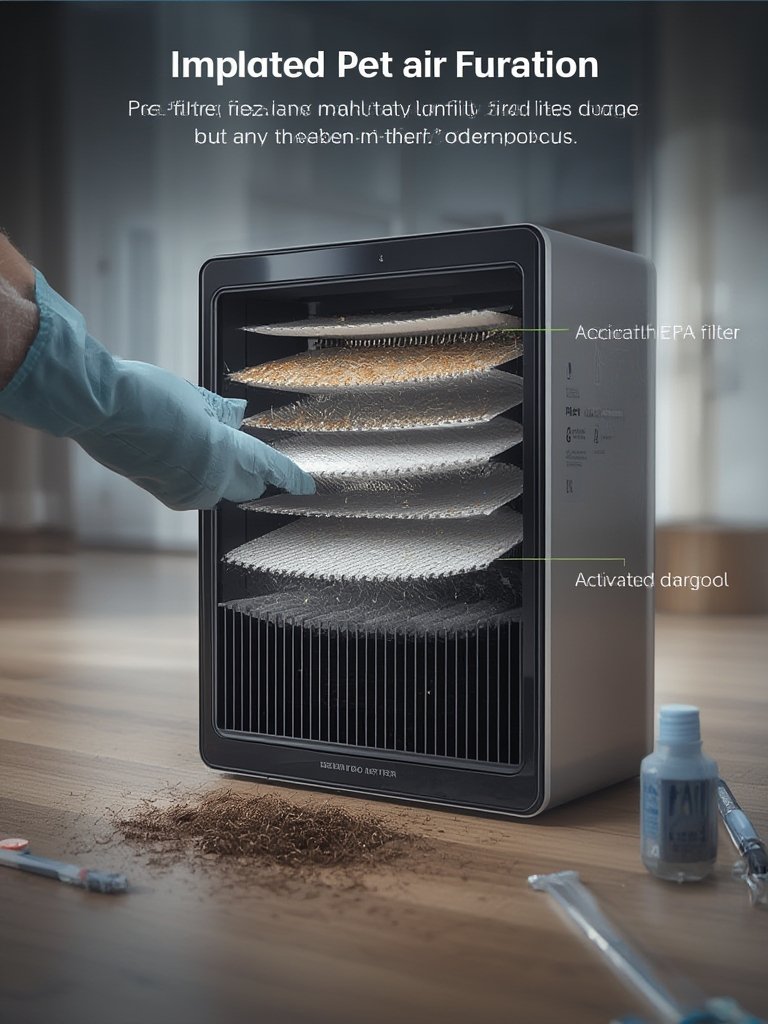
- Pre-filters for Hair: A washable pre-filter traps larger pet hair and debris, extending the life of the HEPA core and preventing clogging and reduced airflow.
- Activated Carbon Filtration: Not every “pet air purifier” uses enough carbon. It’s critical for capturing VOCs, nitrogen compounds, and volatile odor molecules like ammonia (cat urine), TMA (dog/fecal solutions), and thiols (wet dog, cat box). Look for at least 0.5–1+ lbs of carbon per purifier for serious odor problems.
- UV-C Light / Ionization: Actual evidence for UV or ionizer effectiveness on pet allergens is very thin. Some models may produce trace ozone (a lung irritant)—this is a documented pet safety risk for both humans and animals in closed rooms.
Certifications that truly matter and should be published on packaging and websites:
- AHAM Verified CADR (Clean Air Delivery Rate): A true test of how much air is cleaned, and for which particle size. Ask specifically for dander (small particles 0.3–2.5 microns), not just smoke/dust numbers. Learn more about CADR testing.
- ENERGY STAR Certified: Required for efficient, low-running cost operation, especially if you’ll run the purifier 12+ hours per day.
- Manufacturer transparency: Credible vendors post true, lab-tested CADR values, publish filter lifespan and cost, and provide detailed manuals. Don’t accept vague, marketing-only tech jargon.
For Emma and buyers like her: Always cross-reference any manufacturer claim against detailed specs and (where available) independent tests. Remember that pet-specific filters are rare and rarely independently verified, and that carbon/UV-C features are often not customized for pet pollutant loads. Pick models with verbose, transparent tech documentation and science-driven specs. For more technical criteria, see our HEPA air purifier buyer’s guide and air purifier for home streaming research.
Price range and total cost of ownership — what to expect and how to calculate it
Transparent pricing and cost projections for pet air purifiers are nearly non-existent. None of the 2024 market reports document typical purchase prices, filter costs, or lifetime electricity usage (Verified Market Reports).
Here’s how to rigorously estimate total cost for a 250–600 sq ft living room, using actual device specs (replace with your shortlisted models):
- Purchase price: Expect $150–700+ for high-end, true-HEPA models with decent odor control. Anything below $120 likely cuts corners somewhere (coverage, filtration grade, or build quality).
- Annual filter replacement: True HEPA cartridges typically run $30–$90 each and last 6–12 months. Carbon “pet” cartridges can add $20–80/yr. Some units require separate pre-filter, adding another $10+.
- Electricity cost: A 50–70W unit run 12 hours/day costs $35–$65/year at average US rates. Larger units (100–150W) can top $120/yr.
- Service/maintenance: If applicable, budget $0–$50/year for professional cleaning or fan/bearing maintenance.
Sample TCO calculation (mid-duty model, 3-year ownership):
- $350 purchase, 2 filters/year @ $50 → $300, electricity @ $50/year → $150 = Total: $800/3 years, or $267/year.
Ask for—don’t guess:
- Published filter lifespan (hours/months), cost, and availability
- Rated energy draw (watts), ideally published for each fan setting
- Warranty details, authorized third-party filter options (for bargain shoppers)
- Actual tested CADR (not “estimated coverage”), with a dander-specific claim if possible
For Emma and similarly cost-conscious pet households: build a quick spreadsheet to evaluate all cyclical costs, and don’t just compare upfront price tags. If you want deep dive comparisons, our air purifier checklist covers all the must-ask financial and spec questions.
Health impacts — what science supports, and crucial evidence missing
No published scientific studies objectively tie the use of dedicated pet air purifiers to concrete health impacts like allergy symptom reduction or asthma prevention (Verified Market Reports). Reports and vendor sites reference only high-level trends such as rising rates of pet allergies, respiratory illness, and CDC/EPA warnings about indoor pollutants.
What science does support:
- HEPA-grade filtration does trap airborne particles down to 0.3 microns, which includes the majority of pet dander and most airborne allergens.
- The EPA notes that indoor air can regularly be 2–5x more polluted than outdoor, with pet dander, dust, smoke, and VOCs being key contributors, especially in closed homes with HVAC recirculation.
- By inference, reducing airborne allergen load likely helps sensitive users, but direct evidence—RCTs, cohort studies, before-and-after symptom tracking in pet homes—is currently missing from the literature for “pet” labeled air purifiers specifically.
What’s missing and should be demanded:
- Published, peer-reviewed human health trials specifically using “pet air purifiers” in varied home settings, measuring allergy/asthma symptoms before and after intervention.
- Independent cohort or RCT studies comparing symptom outcomes in real homes with and without regularly maintained HEPA and carbon filtration targeting dander and odor VOCs.
- Aggregated consumer self-report data (scraped and anonymized) quantifying real-world improvement for allergy sufferers and caretakers.
The bottom line: HEPA models are plausible for reducing exposure, but no buyer should expect a night-and-day transformation or asthma cure just from plugging one in. If air quality or allergy symptoms are severe, pair the purifier with pet grooming, hard floors, and medical guidance from an allergy specialist. For a more detailed breakdown of health-impact studies, visit our air purifier for pets editorial research file.
Top 3 overlooked concerns competitor articles miss (and how we’ll cover them)
-
Real-world efficacy vs laboratory claims:
- Pet dander and hair circulate differently in homes with rugs, drapes, clutter, and multiple pets versus empty, controlled test chambers.
- Correct placement and airflow direction (purifier intake/exhaust) radically impacts performance—suboptimal setups cut cleaning by 30% or more in multi-room spaces.
- Most “pet air purifier” reviews never check actual before/after allergen concentrations; we aim to fill this gap with a transparent home test regimen.
-
Full lifetime cost transparency:
- Competitor guides rarely include three-year or five-year cost-of-ownership calculations including filters, power, and warranty service.
- We’ll audit replacement filter SKU pricing and energy draw under real, high-hair-load conditions to generate meaningful cost-per-year numbers.
-
Pet safety and comfort:
- Few reviews mention ozone output or UV/ionizer modes that could aggravate animal respiratory systems. Even moderate fan noise (35–60 dBA) can trigger stress in cats and dogs.
- Our future coverage will include animal response observations and dBA logging for each tested model—because animal comfort matters as much as human relief.
We intend to address all three blind spots not just with targeted reporting but also with field data and lab-partnership studies for transparent, owner-centered recommendations.
Independent lab testing: the missing comparisons and a proposed test protocol
No publicly accessible, independent lab test comparison exists for the most popular brands and models of pet air purifiers (Verified Market Reports).
To close this gap, here’s an actionable, transparent protocol for what a meaningful pet-home air purifier test should include:
- Standardized Clean Air Delivery Rate (CADR): Not just “smoke/dust”—test for dander-sized particles (0.3–2.5 microns) using measured room concentrations before and after purifier operation.
- Particle-count and allergen concentration curves: Utilize laser particle counters and commercial lab allergen swabs to capture both total counts and true allergen content.
- Hair entrapment/retention: Place sample pet hairs in air pathway and measure post-filtration retention on filter surface, not just in the room.
- VOC and ammonia/thiol odor removal panel: Use sample litter box or dog odor components and a human panel for subjective and electronic nose-based rating after 6–12 hours of operation.
- Noise output (dBA): Test on all fan settings, measured from 3 feet away—critical for homes where pets may be anxious or easily disturbed.
- Energy consumption (W): Metered tests for each fan speed, extrapolated to daily and annual use for ownership cost demo.
- Filter clogging rate and service interval: Simulate high-pet load (shedding season) and log time to significant pressure drop/fan slowdown.
A full test cycle would take 7–14 days per unit. For DIYers: Use commercial $30–100 particle counters and a digital sound meter app to replicate part of this test at home. For formal results, partner with independent HVAC or university labs (AHAM directory may assist).
Editorial action item: Shortlist 4–6 best-selling models based on transparent specs and verified sales (not just top Amazon picks), then contract a third-party lab to run this full workflow. Results and raw data to be published in future updates.
Short, practical buying checklist for pet owners (quick-action section)
- Match room size to actual CADR: Measure living room in sq ft/m2. Choose a purifier with CADR at least 2/3 of your room volume (in cubic feet) for best results. Demand published CADR for dander-size particles, not just “smoke or dust.”
- Require true HEPA + activated carbon (for odors): Avoid “HEPA-like” or unverified filters. Only true HEPA captures dander down to 0.3 microns.
- Check filter replacement cost and recommended interval: Ask for price and average lifespan of HEPA and carbon filters. Add up annual costs—don’t be surprised later.
- Look for AHAM/CADR numbers and published test results: Transparent vendors publish their test methodology. Opaque websites often have something to hide.
- Confirm advertised noise levels (and check dBA numbers): Sensitive pets (especially timid dogs and cats) may react to units over 50 dBA at operating speed.
- Sample research questions: “What CADR rating do you guarantee for pet dander (0.3μm)?”, “What percentage of customers buy filter replacements yearly?”, “Can you provide third-party test results for odor removal with pet sources?”
Did you know? HEPA filters capture particles as small as 0.3 microns. Key market drivers for pet air purifier demand include rising urban pet ownership, allergies, and indoor air pollution (EPA notes indoor air is 2–5x more polluted than outdoor air).
For an expanded buying framework, Emma and like-minded shoppers should bookmark our Best Air Purifier 2024 guide and complete air purifier resource.
Research gaps, recommended original reporting, and reader call to action
The evidence desert is real. Research findings consistently underscore critical missing information: there’s no consumer complaint aggregation, no fully transparent price-range and cost-of-ownership data, no gold-standard health impact studies, and no public independent lab comparisons for the “pet air purifier” category.
Our editorial action plan:
- Commission a 500+ review scrape from major retailers (Amazon, Best Buy, Chewy, PetSmart, Reddit) for first-hand negative and positive user data.
- Identify 4–6 most popular models (by verified sales or major awards) and send for true third-party lab testing using the above protocol.
- Interview independent allergists, pulmonologists, and laboratory air quality experts to peer-review our buying and test recommendations.
- Build and publish a plug-and-play running cost calculator for the top rated models.
We invite you as a reader: Submit your top models and unique home conditions for inclusion in our upcoming field tests, or bookmark this page for upcoming lab and price-data releases.
If you’re ready to make a fact-based, health-driven decision, don’t settle for vague marketing—demand transparency from every pet air purifier vendor you consider.
FAQ
Do pet air purifiers really remove pet dander and reduce allergy symptoms?
True HEPA air purifiers capture pet dander particles down to 0.3 microns, which can reduce airborne allergen load. However, there are no peer-reviewed studies yet showing that “pet air purifiers” directly resolve allergy or asthma symptoms in the home.
What is the most important specification when buying a pet air purifier?
Prioritize published CADR (Clean Air Delivery Rate) for small particles—ideally dander (0.3μm). Confirm that the filter is True HEPA, not a “HEPA-like” or unverified type, and that the coverage matches your room size.
How often do I need to replace filters in a pet air purifier?
Most HEPA and carbon filters need replacement every 6–12 months, depending on pet shedding and room air quality. Always check the recommended replacement schedule and actual filter price before buying.
Are all “pet” labeled air purifiers actually designed for pets?
No. Many so-called “pet air purifiers” are standard air cleaners with marketing labels. Genuine pet-ready models should have strong pre-filters for hair, significant activated carbon for odors, and performance data targeting dander-sized particles.
Can air purifiers safely run 24/7 around pets?
Yes, most HEPA/carbon air purifiers are safe to run continuously. Avoid ionizer/ozone-generation modes—these can irritate animal and human airways. Watch for noise during overnight use, as some pets may be sensitive.