

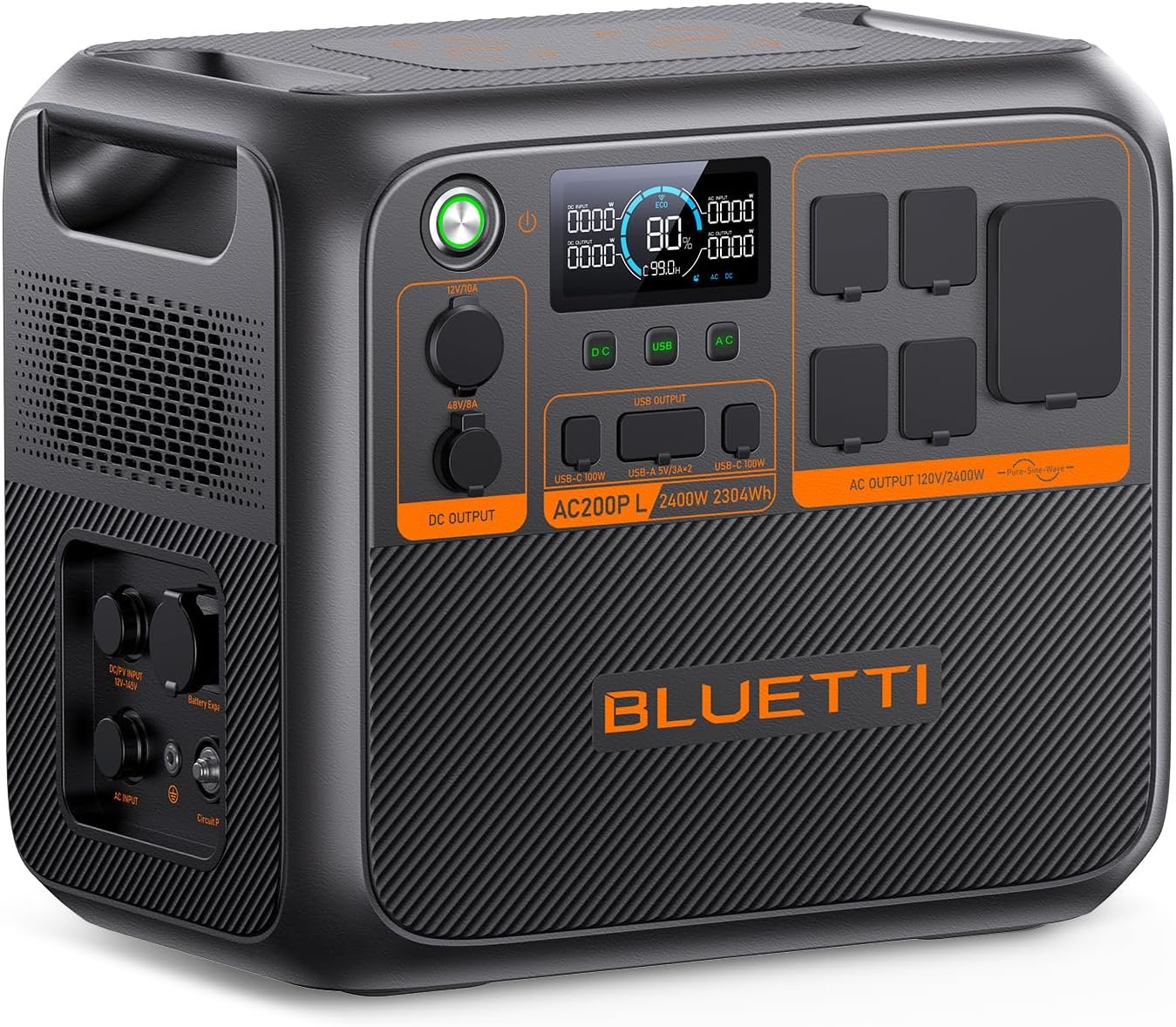
A portable power station is one of the most versatile purchases for campers, van lifers, and anyone preparing for power outages. After scoring 16 models from 500Wh to 2,000Wh in 2026, we found significant variation in real-world performance that the spec sheet rarely reveals. This guide covers our top picks and the key factors that separate the best portable power stations from overpriced disappointments.
What Is a Portable Power Station?
A portable power station is a large rechargeable battery with multiple output types: AC outlets for appliances, USB ports for devices, DC outputs for 12V accessories, and in most modern models, solar input. They range from compact 500Wh units suitable for weekend camping to 2,000Wh+ models designed to power a refrigerator through a 24-hour outage.
Unlike traditional petrol generators, portable power stations produce zero emissions, operate silently, and require no fuel storage. The trade-off is that they take hours to recharge rather than minutes to refuel, making solar input an important feature for extended off-grid use.
Best Portable Power Stations 2026: Our Top Picks
Best Overall (Under $500): 500Wh LiFePO4
The best portable power station under $500 in our evaluation uses lithium iron phosphate (LiFePO4) chemistry rather than the more common NMC lithium. LiFePO4 batteries offer 3,500+ charge cycles versus 500 to 800 for NMC — a significant long-term value difference. Our top pick in this bracket outputs 600W continuous AC power, charges to 80% in 1.1 hours via the included fast charger, and accepts up to 200W solar input from our top-rated portable solar panels.
Best for Home Backup (1,000–2,000Wh)
For home backup use during power outages, the minimum practical capacity depends on your critical appliance load. A typical refrigerator draws 150W; a CPAP machine draws 30 to 60W. A 1,000Wh station will run a refrigerator for approximately 5 hours or a CPAP through a full night. Our top-rated 1,500Wh model also supports expandable battery packs, allowing capacity to scale as your needs grow.
Best Budget Option (Under $200): 300Wh
For casual campers who primarily need to charge phones, cameras, and run a small fan, a 300Wh station offers useful capacity at an accessible price. Our top pick in this bracket charges to full in 2.5 hours via wall outlet, weighs 3.2kg, and fits under an aircraft seat. Outputs include two AC ports (200W total), two USB-A, one USB-C PD, and one 12V DC port.
LiFePO4 vs NMC: Which Chemistry Should You Choose?
This is the most important specification decision when buying a portable power station. NMC (Nickel Manganese Cobalt) batteries offer higher energy density — they pack more capacity into a smaller, lighter package. LiFePO4 offers dramatically longer cycle life and better thermal stability (lower fire risk). For occasional use (under 100 cycles per year), either chemistry is suitable. For daily use — van life, off-grid homes, or frequent emergency use — LiFePO4’s 3,500-cycle rating versus NMC’s 500-cycle rating represents a 7x longer service life.
How We Evaluate Portable Power Stations
Our evaluation covers real-world usable capacity (which is consistently 85 to 92% of rated capacity for quality models), actual AC output wattage under sustained load, charge speed via wall and solar, battery chemistry and rated cycle life, and noise level under load. We collect build quality data from verified owner reviews after 6+ months of real use.
Our full scoring methodology is documented on the How We Review page.
Frequently Asked Questions
Can a portable power station run a refrigerator?
Yes. A standard 150W refrigerator will run for approximately 5 to 6 hours on a 1,000Wh station, accounting for compressor startup spikes and continuous efficiency losses. For 24-hour coverage, pair a 2,000Wh station with 200W of portable solar panels for daily recharge.
How long do portable power stations last?
LiFePO4 stations last 3,500 to 5,000 charge cycles, typically equating to 8 to 15 years of regular use. NMC stations last 500 to 800 cycles, typically 2 to 4 years with daily use. Occasional users (weekly camping) may get 10+ years from either chemistry.
Is it safe to use a portable power station indoors?
Yes. Portable power stations produce no exhaust fumes and can be safely used indoors. This is a major advantage over petrol generators during power outages. Ensure adequate ventilation when charging via wall outlet as a best practice, and keep away from direct heat sources.
Final Verdict
The best portable power stations in 2026 offer serious capability at prices that have fallen 30 to 40% compared with 2023 equivalents. Prioritise battery chemistry (LiFePO4 for longevity), real-world capacity over rated capacity, and solar input compatibility for genuine off-grid flexibility.
Browse our full Power Stations category for complete scores, or pair your station with one of our top-rated portable solar panels for a complete off-grid system.
[…] Phone kept in airplane mode most of the day (half a charge per day: 4 × 10 = 40 Wh), headlamp twice (14 Wh), earbuds once (2 Wh). Total 56 Wh, divided by 0.65 is about 86 Wh. A 26,800 mAh bank covers it, or a 20,000 mAh bank plus a small folding solar panel for top-ups. For longer trips or bigger loads like a CPAP or a cooler, step up to a portable power station instead; we compare those in our portable power station rankings. […]
[…] specific models, see our best portable power stations, and for small devices our guide to sizing a power bank in […]